We took A road trip through France
You can learn a lot from emails.
You can learn almost nothing about how well your product actually works in someone's hands.
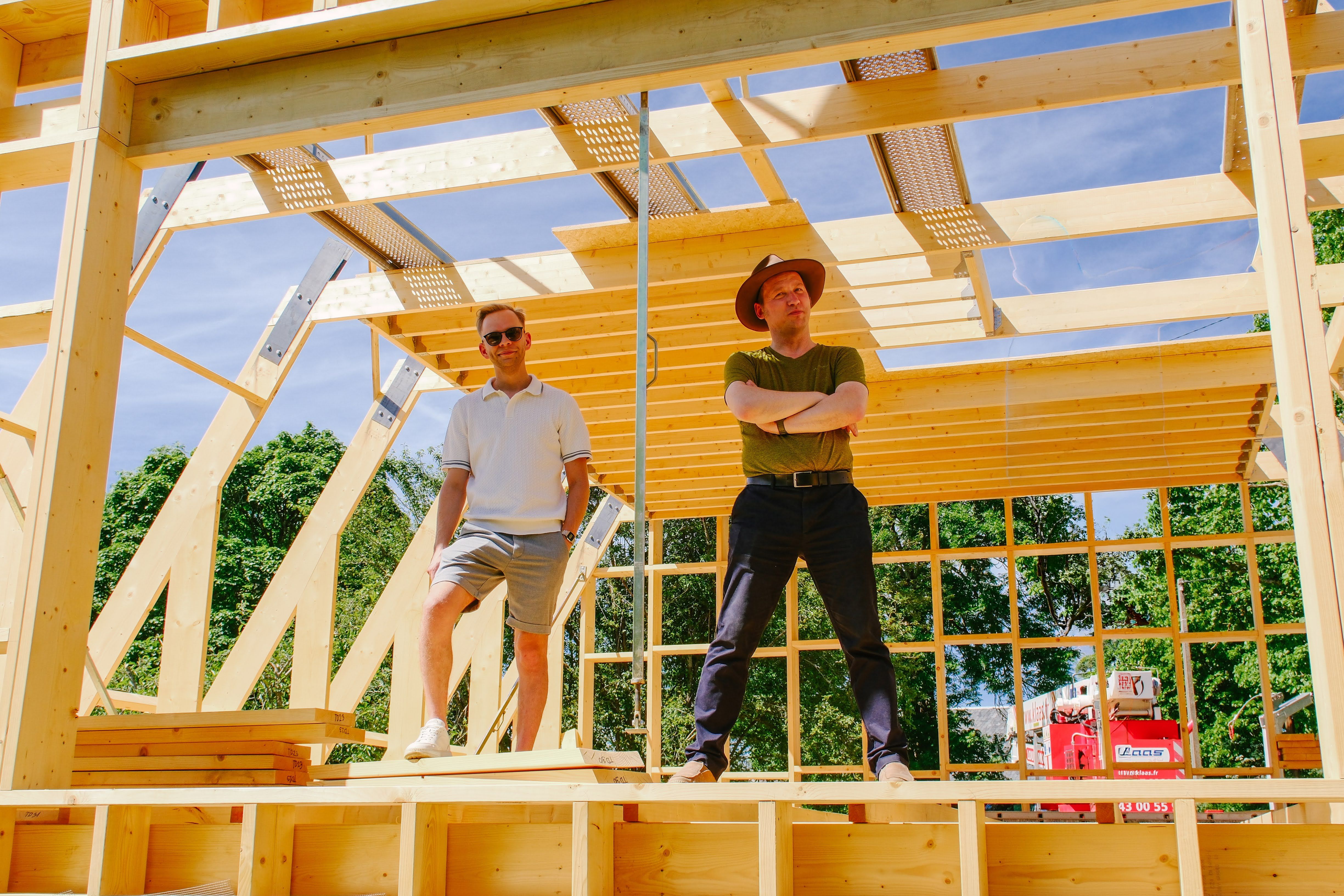
That's why Indrek (our CEO) and Priit (Head of Sales) packed their bags and drove the length of France - Paris to Lyon to Nice - visiting six customer builds and hosting an open house day along the way.
Here's what they found.
Why France, and why now
France is not a small market. Nearly 70 million people, with huge stretches of countryside, mountain terrain, and coastline. Most Avrame customers build outside cities. The country is a natural fit.
There are already around 15 Avrame houses in France - some finished, some just getting their frames up. Two strong local representatives work the market. But to really understand how things are going, you have to show up.
As Indrek put it: people are more talkative in person. You pry out the nuances you'd never get over email.
Six houses, one open house day
The route covered a lot of ground. Here's the quick breakdown of what they visited:
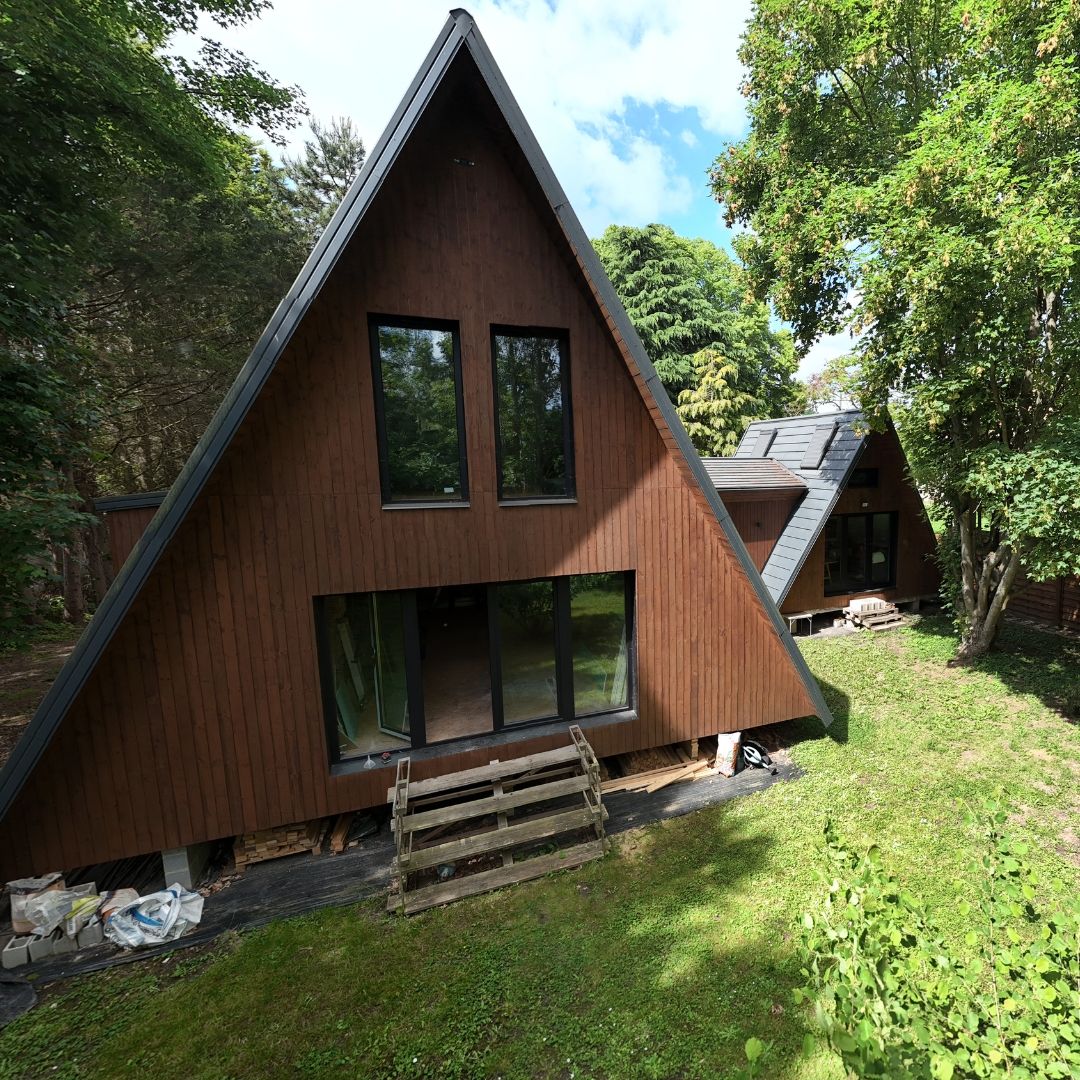
North of France (≈45 min from Paris, near Dreux): The representative's own Trio 120 + Duo 57 combo. Exterior finished, interior work still in progress on the Trio side. Open for visits by appointment.
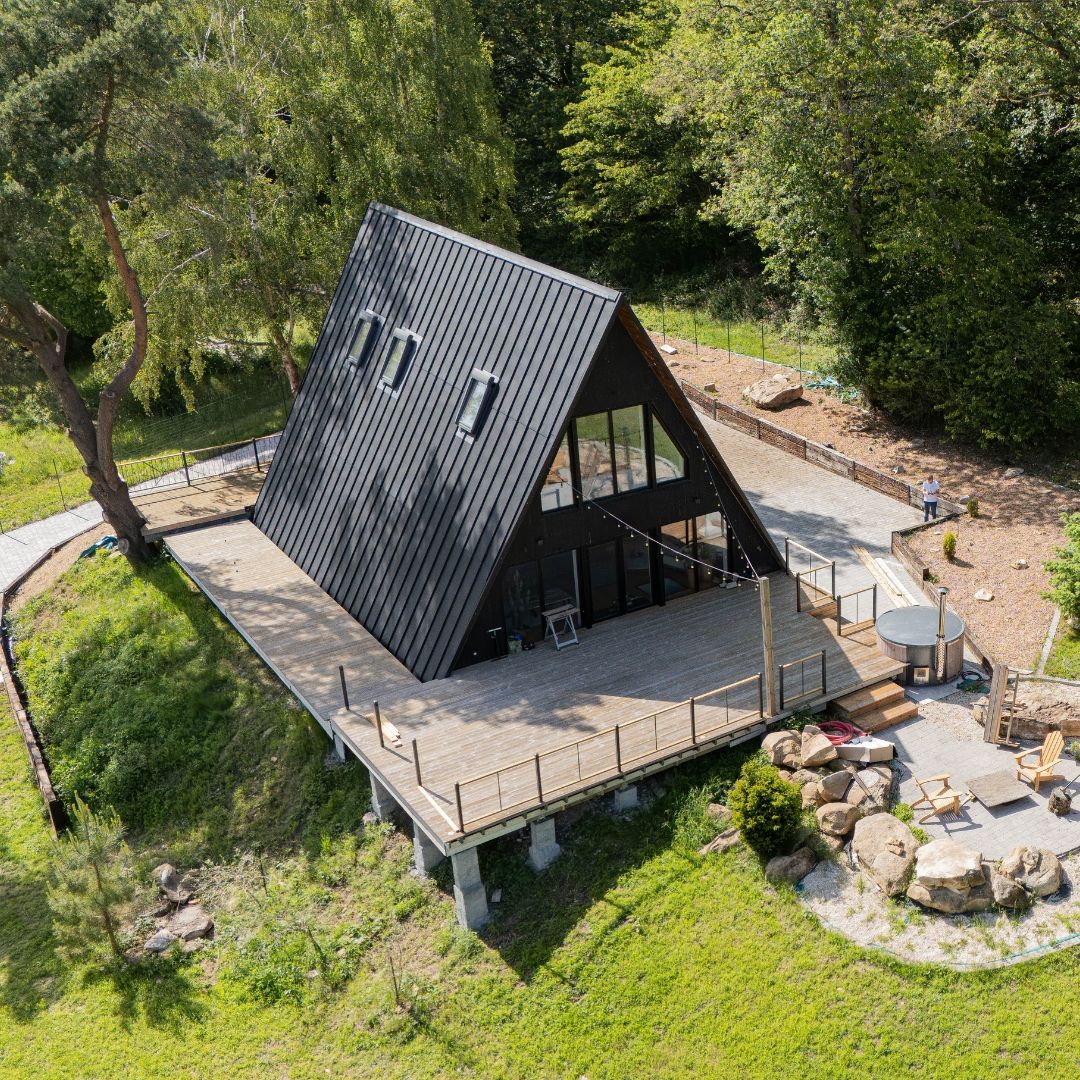
Privately owned Trio 120, near Rambouillet: Superbly finished and furnished. Partly DIY construction. The kind of house you walk into and immediately start rearranging your life plans.
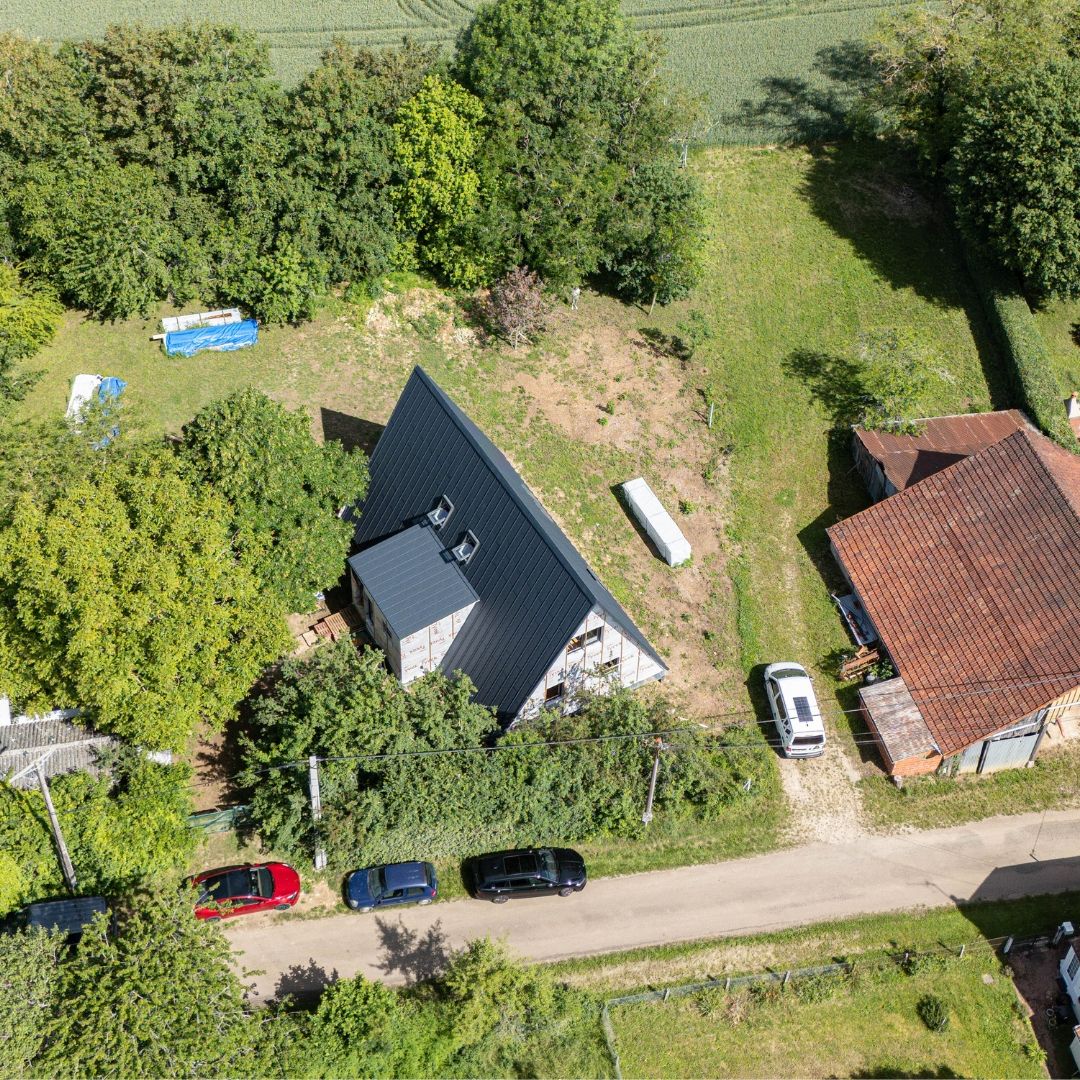
Trio 150, Alligny-Cosne area: Owner started building in March 2026. Progress has been solid. Mostly DIY.
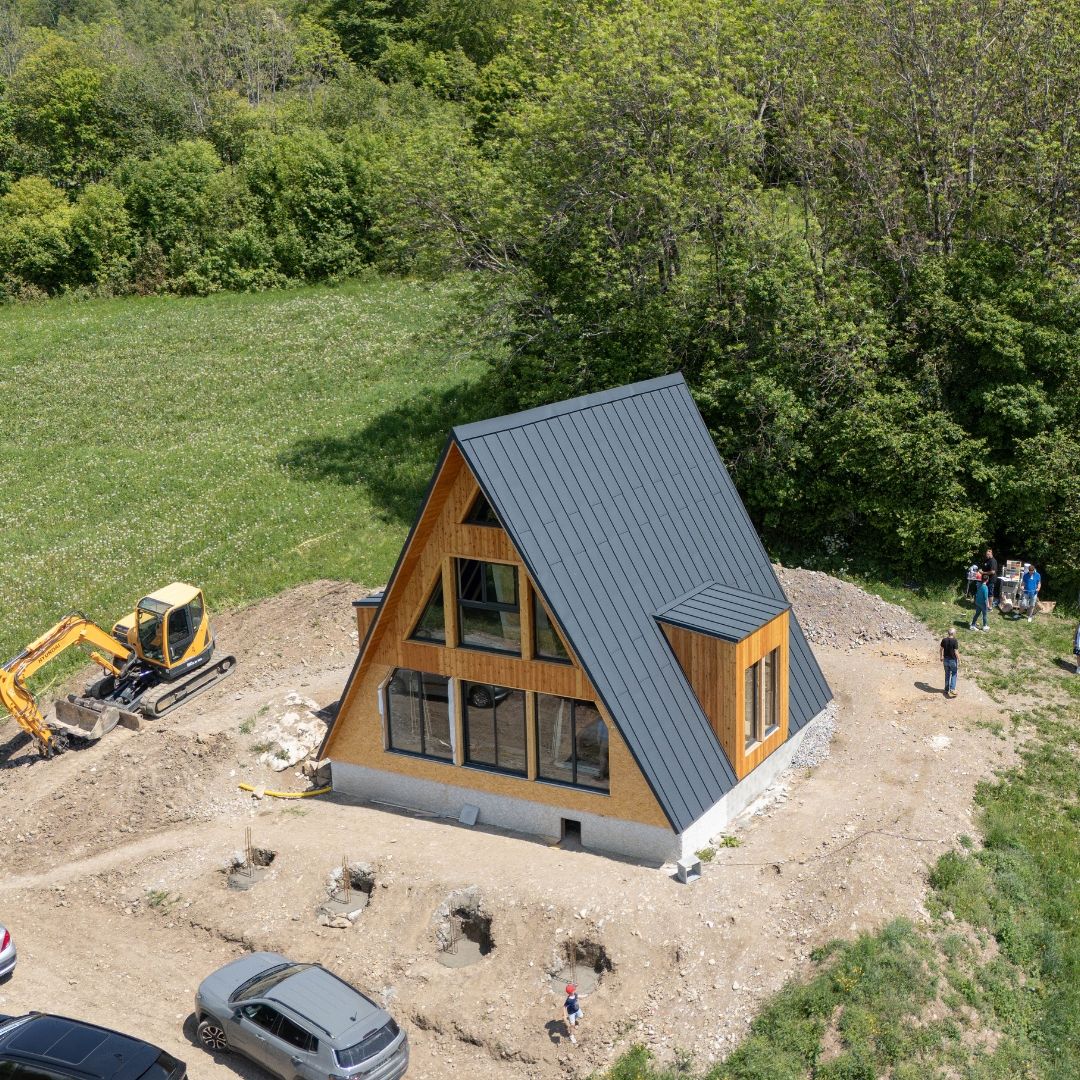
Trio 75, near Gap: The owner's family is building it. Two months from completion. One of the most scenic locations an Avrame has ever sat in - and also where the open house day was held.
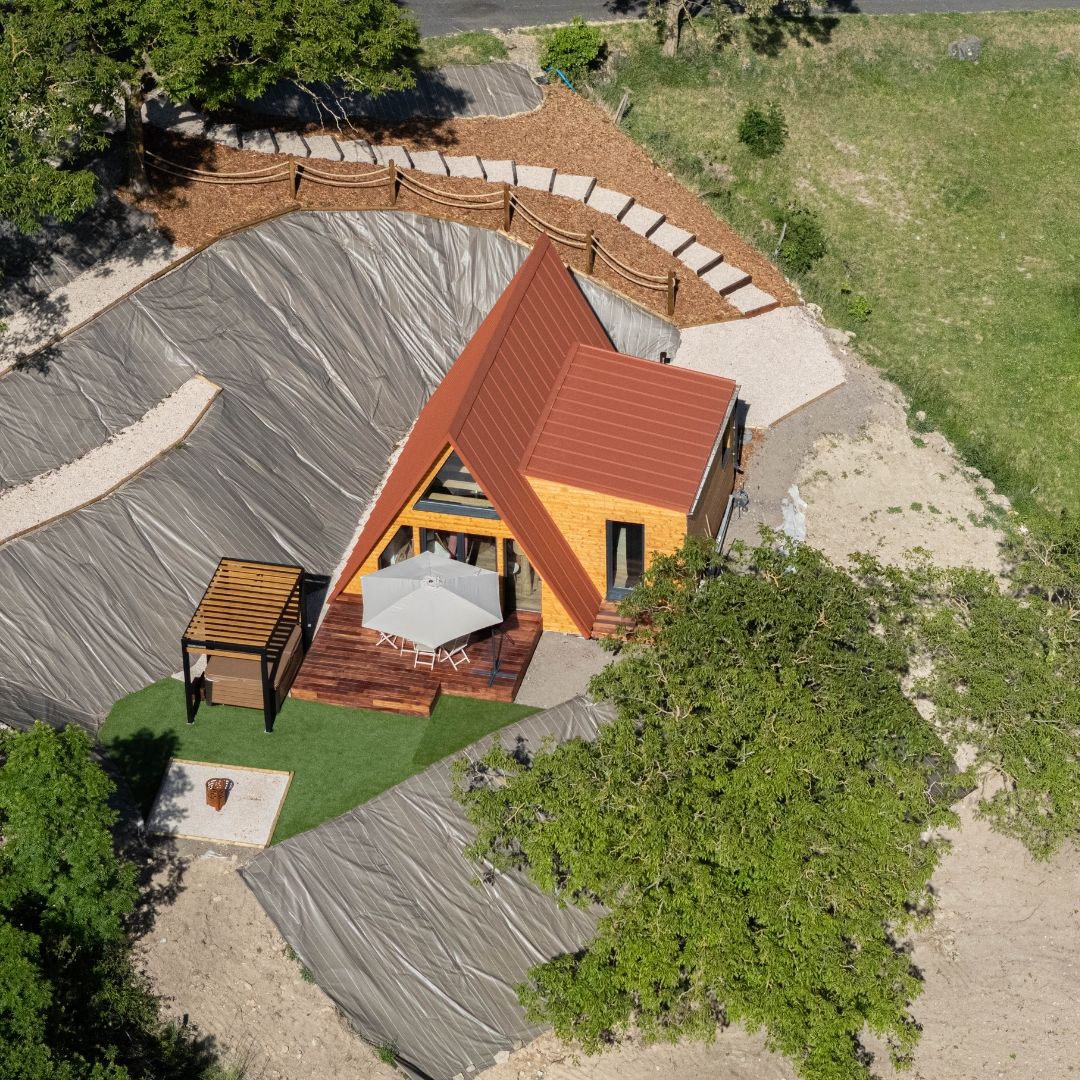
Duo 75, Pardines: Fully finished. This one stopped Priit in his tracks. The dormer creates a 36 m² ground floor (entrance, open-plan kitchen and living room, bathroom, master bedroom) plus a 6.3 m² loft for sleeping. Remarkably functional for the footprint. This house is available for the short-term rental: Book here.
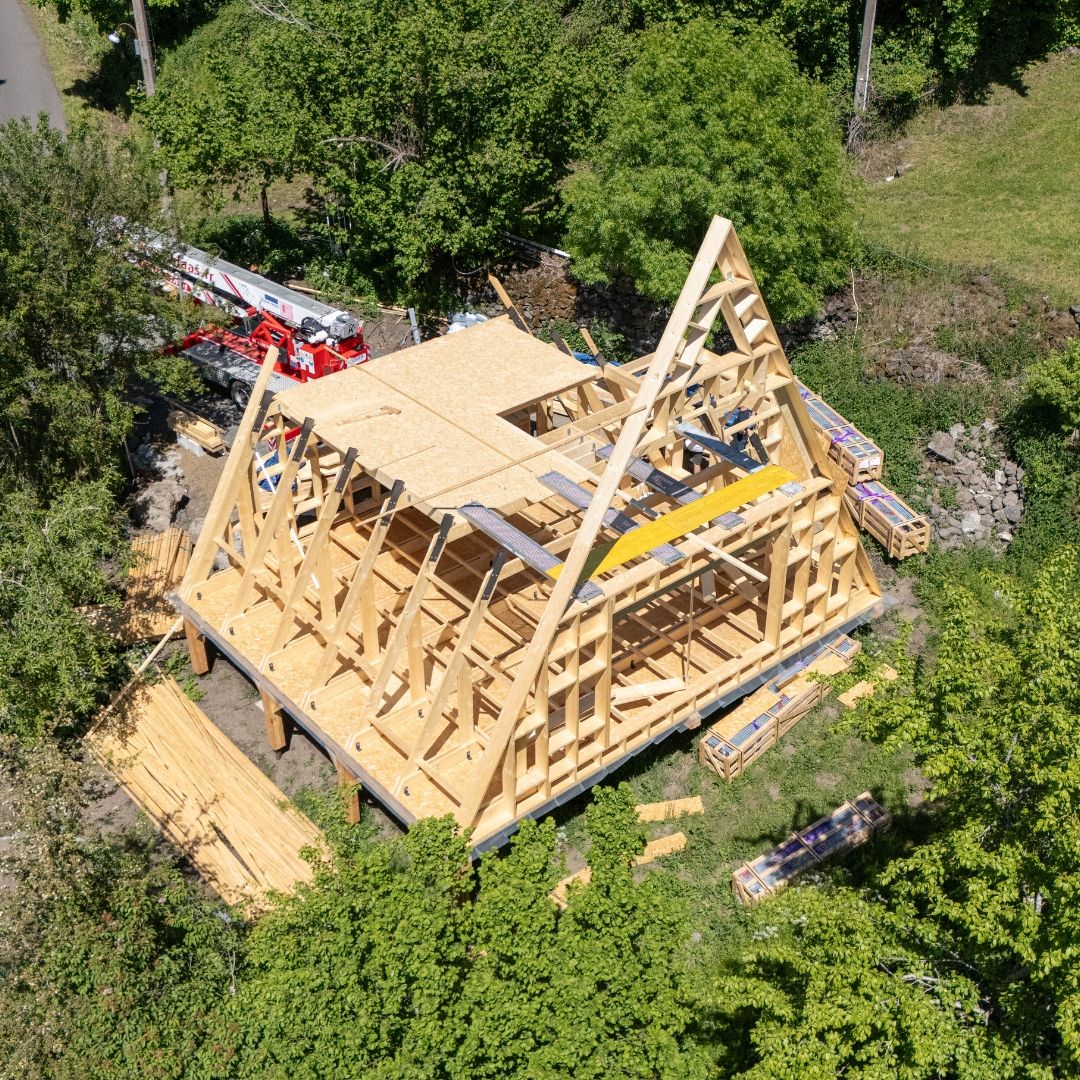
Trio 75 under active assembly (Clermont-Ferrand area): The contractor had just started. Ground floor frames were up. A useful reminder that every finished house starts here.
What the open house visitors actually asked about
About 15 people came to the open house, representing roughly 10 separate projects. These weren't curious neighbours - they were people with plans who wanted to see the house with their own eyes before committing.
Their questions fell into three buckets:
1. Customisation.
How much can we change? What can we move, add, extend? The honest answer is: quite a lot. No interior load-bearing walls means the floor plan is yours to work with. Dormers, length extensions, deck configurations - these are standard options, not special requests.
2. Assembly complexity.
Will we actually be able to build this? The kit arrives pre-cut with detailed instructions. You'll want at least one specialist overseeing the structural work. Roof, windows, HVAC, electrics, and plumbing should have professional hands on them. The frame itself? Many of the houses they visited were built largely by their owners.
3. Building regulations.
Will it pass permit review? From a technical standpoint, Avrame has never encountered a structural issue. The question in France is usually whether the architectural form - roof pitch, building height - suits the local municipality. Seismic packages are available for areas in the south that need them. Materials can be adjusted to meet local finishing requirements.
Lead times also came up often: up to 12 weeks to produce the kit, plus roughly a week to deliver to France.
The thing that surprised everyone
On paper, A-frames look like cosy mountain cabins. Nice for a weekend. Maybe a bit cramped for real life.
Walking through one changes that impression fast.
Almost every visitor at the open house - and almost every customer Indrek and Priit have spoken to - reacts the same way when they step inside: the space is wider and more open than they expected. The slanted walls don't close in on you. The light comes from everywhere.
The Duo 75 made the point clearly. That's a full two-bedroom layout with a bathroom, an open-plan living area, and a loft - all in 42,1 m² of floor area. It works because nothing in it is wasted.
What French builders are actually up against
The hardest part of building in France, according to both Indrek and Priit, comes down to two things: permits and financing.
Architectural restrictions vary by municipality. Some areas have strict rules on roof pitch or facade materials. It's not insurmountable - the French reps can advise on permitting service and help find builders - but it's the part that takes the most patience.
Financing a non-traditional build can also be harder than financing a conventional one. That's not unique to France, but it's worth knowing going in.
A story worth telling
One owner they visited has been building a Trio 150 since March. His approach to the whole project mirrors something Avrame has always believed: a house doesn't have to be a burden.
He sold his previous house. He's building a new one without a bank loan. No debt, no oversized mortgage, no decade of payments attached to a building he had almost no say in. He's doing it on his own terms, in the countryside, at a pace he controls.
Seeing that in person - a young person choosing that path - was, by Priit's own words, genuinely refreshing.
Our representatives, Aurore and Anaël, in the north have a similar story. They came to Avrame as customers first. Built their own house. Then decided to represent the company. That's not a marketing point. It's just what happened.
What changes because of this trip
For one, the French reps will get more structured support. Local representatives need thorough training and ongoing backing from Avrame's side - that's a clear takeaway.
For another: the concept works. Fifteen houses in various stages of construction, mostly DIY, mostly well-assembled. Indrek noted the build quality from French customers was notably high. Houses were put together with care.
That's useful information. It means the kit is doing what it's supposed to do in real hands in the field.
And yes, there was food
You don't drive from Paris to Nice without eating properly.
Indrek's highlight: sausages on an open fire at a customer's place, and oysters in Nice.
Priit's: swimming in the Mediterranean on the last dayand warm weather.
Neither of those things makes it into a product spec. But they're part of why you do the work.

Can you build an Avrame A-frame in France?
Yes. There are already around 15 Avrame houses in France at various stages of completion. The main hurdle is municipal permit review - specifically whether the roof pitch and building height meet local requirements. The French reps can advise on this and connect you with local builders.
How long does it take to get an Avrame kit delivered to France?
Production takes up to 12 weeks after your order is confirmed. Delivery to France adds roughly one week. So from order to kit-on-site, budget around 13 weeks.
Can I build an Avrame A-frame myself in France?
Many French customers are doing exactly that — mostly or partly DIY. The kit arrives pre-cut with detailed assembly instructions. Avrame recommends having at least one specialist overseeing the structural work, and using professionals for roof, windows, HVAC, electrical, and plumbing. The frame itself is manageable for a motivated owner.
Does Avrame have seismic certification for France?
Yes. Seismic packages are available for the Duo and Trio series, which matters in parts of southern France. If your build site is in a seismic zone, ask your rep about this specifically.
Is an A-frame a realistic permanent home, not just a cabin?
Yes. The Trio 150 and Trio 120 models in particular are full family homes. The Duo 75 packs a complete two-bedroom layout into 42,1 m². The visitors at the open house came with real project plans, not cabin daydreams.