How To Get Affordable Housing: 6 Real Ways
You get affordable housing by controlling the variables that drive up cost: buying land instead of relying on listings or builders, choosing a cheaper location, going off-grid where it makes sense, right-sizing the house, separating needs from wants, and building with a pre-engineered kit system instead of conventional construction.
You already know the definition. Affordable housing is housing that costs no more than about a third of your income, and that applies whether you're just starting out or already doing fine. It isn't a poor-person problem.
Knowing the definition doesn't get you the house. Here's how you actually get there. Six points, in the order they matter.
1. Buy Land And Build, Instead Of Waiting For A Listing
The default path is browsing listings or hiring a construction company to build you something. Both are systems that exist, and both work for some people.
But scroll through listings long enough and you'll notice nothing on there is actually affordable for you. Hiring a builder is off the table for a lot of young families too.
The alternative most people don't consider: buy your own land and build in a non-conventional way. It takes more of your own involvement, but it opens up price savings and location choices the existing options don't.
2. Location: How Far From The City Can You Go?
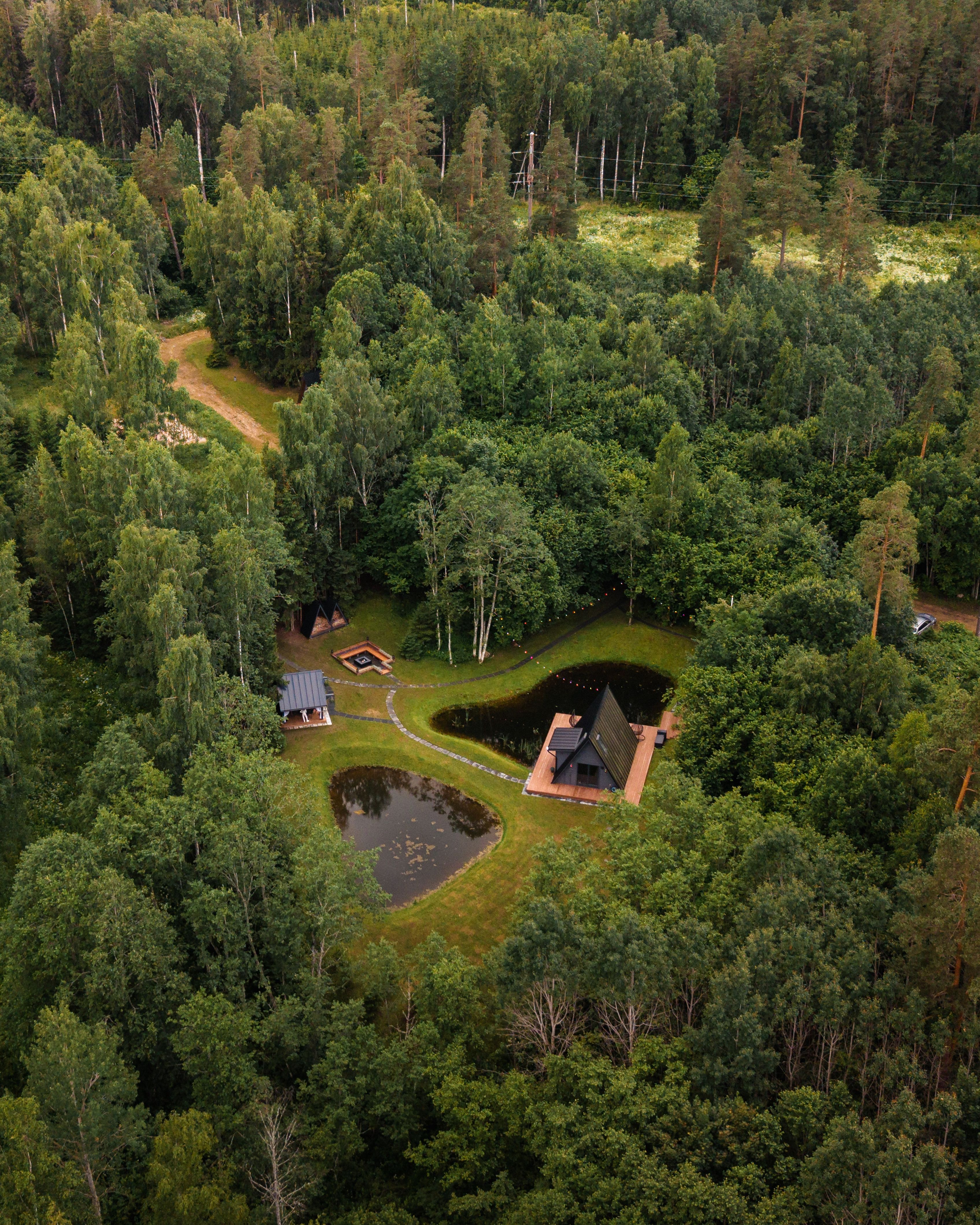
Land gets cheaper the further you get from a city. That's the trade you're making room for.
There's a limit, though. If you're commuting three hours each way, you're spending a huge share of your life in transit, and no amount of savings on land makes that a good deal.
Location also hides savings that have nothing to do with distance. Some listings are cheap because they're missing something: a driveway, a grid connection, access most buyers assume is included.
3. Go Off-Grid To Cut Cost Further
A missing electrical connection isn't automatically a dealbreaker anymore. Going off-grid is far cheaper and more comfortable than it used to be, with affordable battery packs, inverters, and PV panels now widely available.
Housing cost isn't just the mortgage. It's utilities and maintenance too, and off-grid setups are where that ongoing cost drops the most.
So the land gets cheaper because it's missing a connection, and then your monthly utilities get cheaper because you never needed that connection in the first place.
4. Right-Size The House
This is where a lot of people go over budget without realizing it. Building too big doesn't just cost more upfront, it creates running costs for as long as you own the place.
Some reserve space is reasonable. If you're planning to grow the family, plan for it. But an extra guest bedroom you use once a year is something you pay for every single day.
Take a piece of paper and write down your needs first. One bedroom, minimum. A kitchen. A bathroom. If you already have two kids, at least one more bedroom for them. That's the non-negotiable list.
Then write your wants separately. Wants are things you can live without, but the honest question is whether you want to, and whether you can afford to.
The mistake people make is thinking "I'm only building once, I'll build everything I ever dreamed of." Then the house is finished, they're over budget, and they're not happy about it.
The goal stays the same throughout: keep the mortgage, utilities, and upkeep at or under a third of your income. Needs and wants both get measured against that number, not against how big the dream got.
5. Separate Needs From Wants
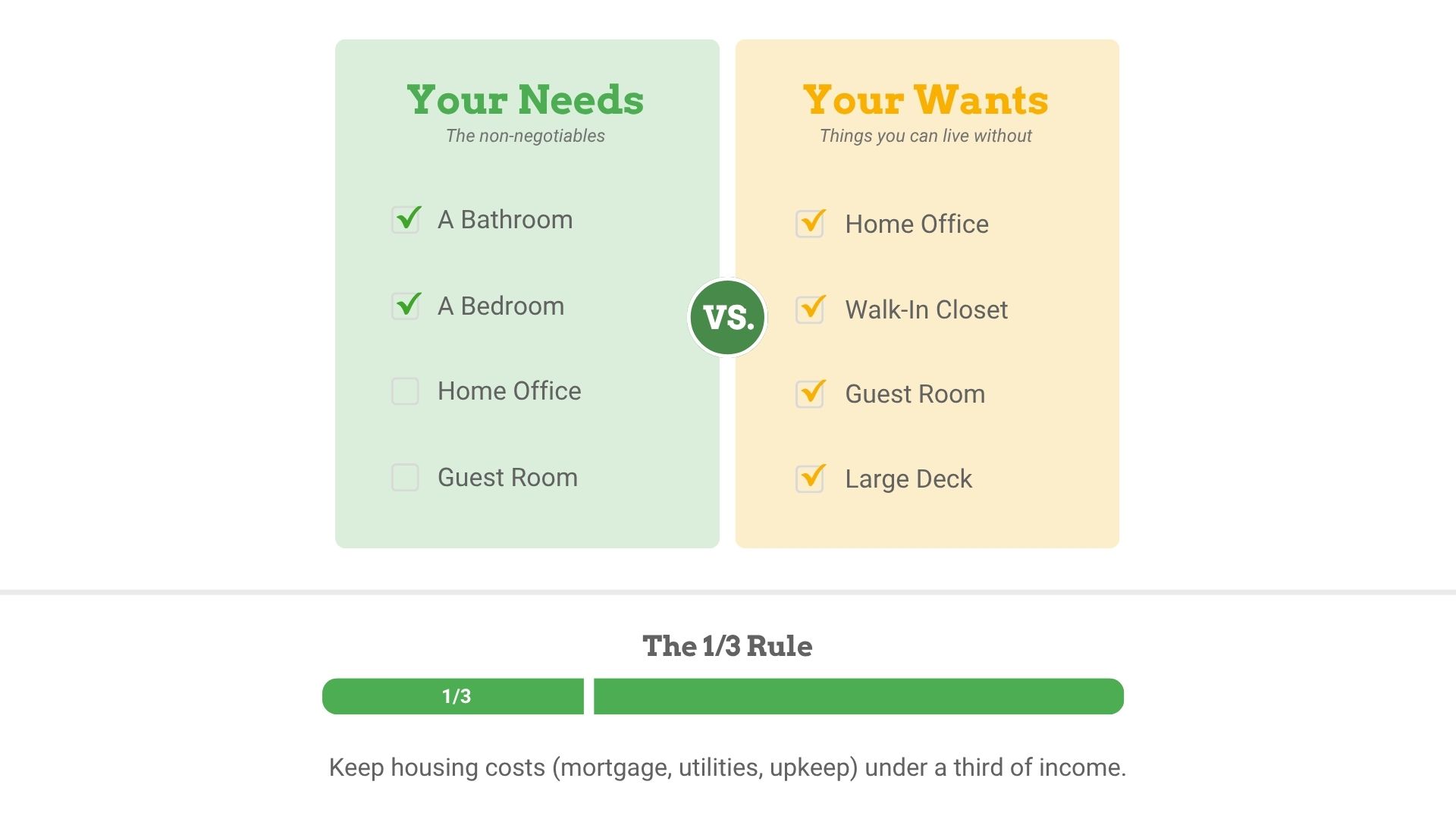
Take a piece of paper and write down your needs first. One bedroom, minimum. A kitchen. A bathroom. If you already have two kids, at least one more bedroom for them. That's the non-negotiable list.
Then write your wants separately. Wants are things you can live without, but the honest question is whether you want to, and whether you can afford to.
The mistake people make is thinking "I'm only building once, I'll build everything I ever dreamed of." Then the house is finished, they're over budget, and they're not happy about it.
The goal stays the same throughout: keep the mortgage, utilities, and upkeep at or under a third of your income. Needs and wants both get measured against that number, not against how big the dream got.
6. Build With A Kit System
Kit systems cut cost because they cut waste. Conventional building methods generate a lot of extra material that a well-optimized kit design never produces in the first place, right down to how efficiently the package fits on a truck or in a container.
A kit system also works well if you want to put in sweat equity, building alongside a local crew instead of paying for full labor. It's built to be approachable, closer to assembling furniture from a manual than framing a house from scratch. Builders in markets with no prior kit-home experience have followed the drawings and gotten it done.
The benefits stack: controlled quality on the materials, manuals that spell out exactly how things go together, and floor plans already optimized so what you're paying for is what actually fits your budget.
Where This Leaves You
None of these six points require a subsidy or a stroke of luck on a listing site. They require trade-offs: land over convenience, a smaller footprint over a bigger one, needs measured honestly against wants.
Following all six may mean letting go of a dream or two along the way. That's the subject of the next episode in this series.
FAQ
How can I get affordable housing without a government subsidy?
Buying land and building rather than relying on existing listings or a traditional builder is the starting point. From there, location, off-grid utilities, right-sizing, and a kit-based build all reduce cost without any subsidy involved.
Is off-grid building actually cheaper?
Yes, in two ways. Land that's missing a grid connection tends to be cheaper to buy, and the ongoing utility cost of an off-grid setup is typically lower than a connected home, thanks to more affordable battery, inverter, and solar options than in past years.
What's the difference between a need and a want when budgeting a house?
A need is non-negotiable for daily living, like a minimum number of bedrooms for your household or a functioning kitchen and bathroom. A want is something you'd like but could live without, such as an extra guest room or a home office, and it's the first thing to cut if the budget gets tight.
Are kit homes actually cheaper than conventional construction?
Kit homes reduce cost primarily by cutting waste. Conventional building generates extra material that a pre-engineered kit design is built to avoid, and the manuals make it realistic for buyers to contribute their own labor instead of paying for all of it.
How far from the city should I look for affordable land?
Far enough that land prices drop, but not so far that your commute eats a large share of your day. There's no fixed distance. It's a trade-off between land savings and how much of your life you're willing to spend in transit.