How Much House Do You Actually Need? (Most People Overbuild)
For most households, the right house size is 10 to 20% smaller than your first instinct. The rooms pushing the budget up are typically oversized landing areas, guest bedrooms used under 15 nights a year, and formal spaces nobody enters. Removing them cuts your build cost, mortgage interest, and heating bills for decades.
You are standing in front of a floor plan and there is a voice in your head: what if it is not enough? What if the living room feels cramped? What if you need that extra bedroom? What if you regret going too small?
That voice is expensive.
It is also wrong more often than not. Most people who build a new home end up with more floor area than they actually use. Not because they needed it. Because they were afraid of not having it.
This post is about calculating that fear in euros.
For most households, the right house size is 10 to 20% smaller than your first instinct. The rooms pushing the budget up are typically oversized landing areas, guest bedrooms used under 15 nights a year, and formal spaces nobody enters. Removing them cuts your build cost, mortgage interest, and heating bills for decades.
The Room That Became A Cat Throne
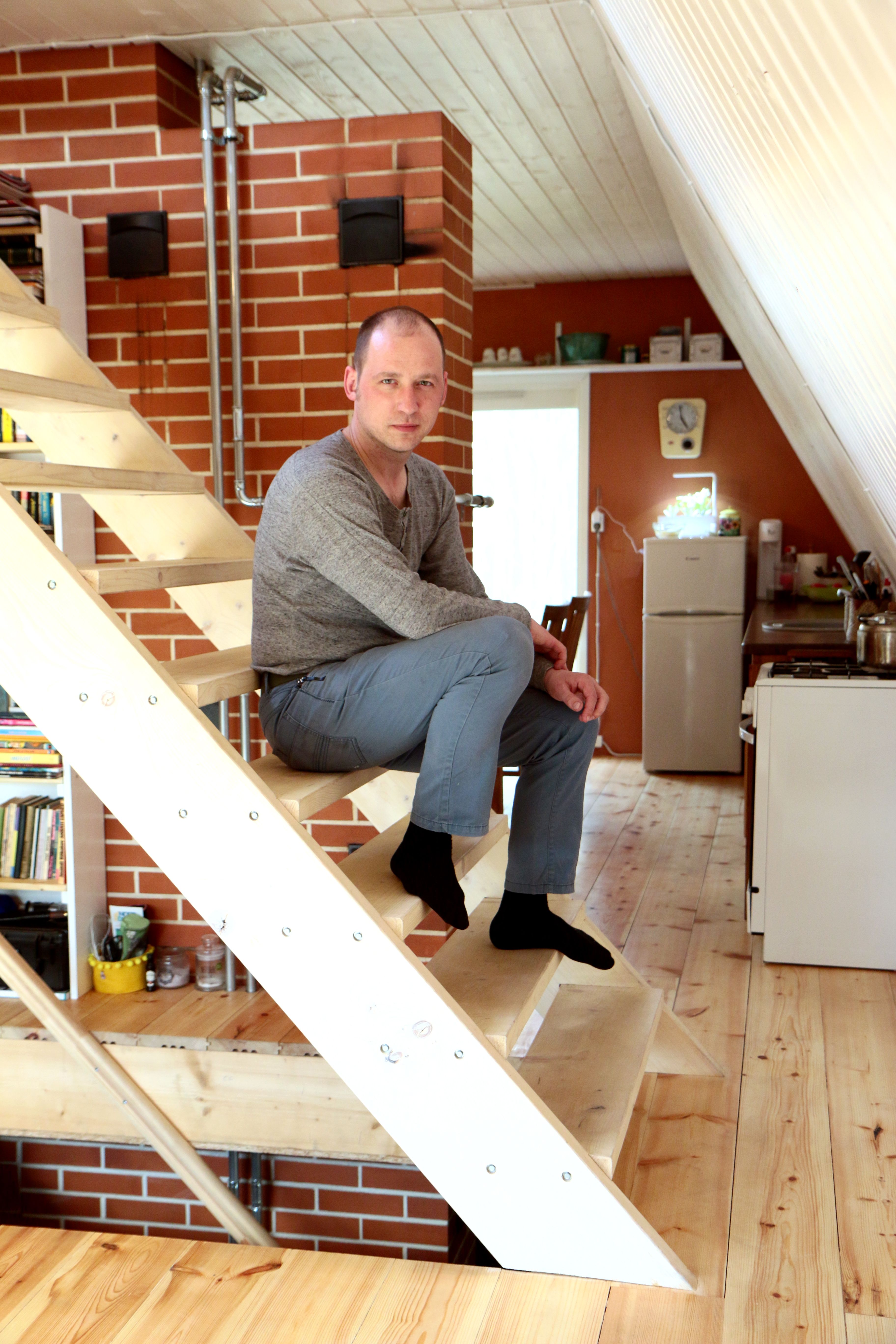
Indrek, Avrame's CEO, has a story he tells often. It is about the landing area at the top of the stairs. That small space between the staircase and the bedroom doors.
In a lot of floor plans, this area is 7 to 8 square meters. With current building prices, that is €12,000 to €14,000 just to build it. Finance it on a 30-year mortgage and you are closer to €20,000 in total payments.
Then you want to furnish it. You hang a picture. It is not wide enough for a sofa, so you put in an armchair. Then you ask yourself honestly: how often do I actually sit alone in an armchair in a landing area?
The answer is never. Your cat will take that spot.
In five years the cat has destroyed the armchair. You throw it out, pay disposal, and buy a new one. Run the numbers over 30 years: €20,000 to build it, €7,000 to €8,000 in heating and maintenance, a few thousand in armchairs.
That is roughly €30,000. About €1,000 a year. For a room nobody uses.
As Indrek puts it: "You could actually have a vacation every winter, a tropical vacation, or you could buy a new car. But you get the landing area."
Can you build that same staircase with a 3 to 4 square meter landing instead of 8? In almost every case, yes. With no practical difference in daily life.
Give Her A Hotel, Not A Bedroom
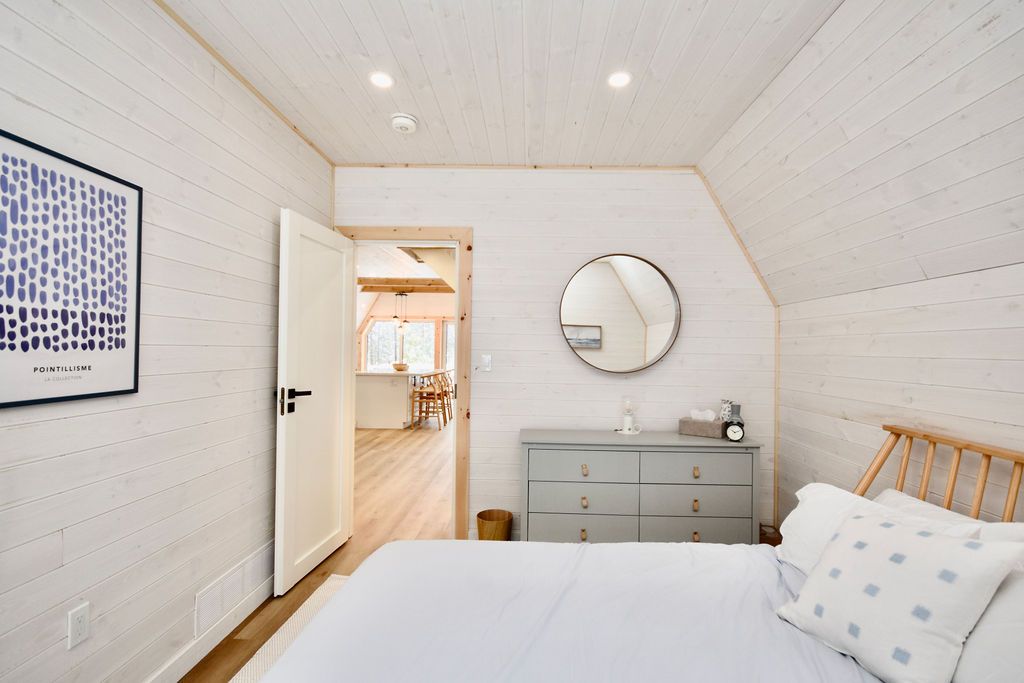
Guest bedrooms are the other one.
Some people plan two of them. When Indrek asks how often they actually get used, the answer is nearly always the same: the mother-in-law comes at Christmas and stays three nights.
Three nights out of 365. The remaining 362 nights that room sits empty. You still heat it. You still pay the mortgage on it.
Would a sofa bed in the living room not solve the actual problem? For one guest, a few nights a year, it covers the need at a fraction of the cost.
Or, if you genuinely have guests 30 or more nights a year, there is a sharper option: a small backyard unit. A SOLO+ model in your garden can host visitors, rent on Airbnb when family is not coming, and turn off its heating entirely in winter when you do not need it. Instead of costing you, it starts earning back some of the build cost.
The question is not "do I want a guest bedroom." The question is whether a guest bedroom is the honest answer to how you actually host people.
Why House Size Keeps Creeping Up
Nobody walks into the planning process wanting to overbuild. It happens in small steps.
One extra room "just in case." A landing area that comes standard in the template. A dining room sized for twelve because that is what dining rooms look like in the reference images.
There is also a structural problem: most of the people helping you plan your build earn more when you build more. That does not make them dishonest. It does mean nobody in the process has a financial incentive to tell you to scale back.
The result is a home sized for aspiration rather than actual daily life. And a mortgage sized to match.
Have A Plan For Every Room Before You Build One
The practical fix is to go through each room before you finalize the plan and ask two questions: how often will we use this space, and what happens in our daily life if it is not there?
A room you use every day earns its square meters. A room you might use a few times a year deserves a harder look.
Some specific rooms worth auditing:
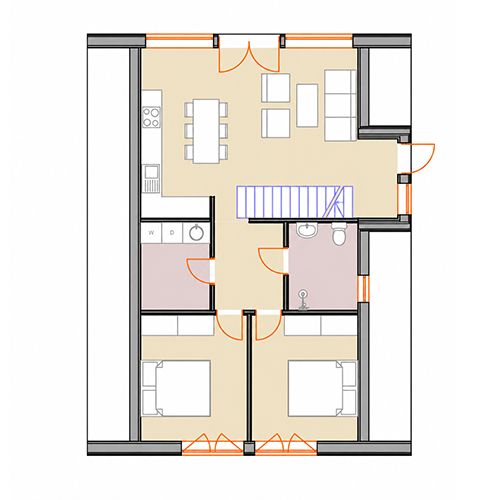
The landing area. Could it be 3 to 4m² instead of 7 to 8m²? Almost always yes. Walk up, open a door. That is the function. You do not need a lounge up there.
The guest bedroom. Count the actual nights per year. Under 15 nights? A sofa bed is the honest answer. Over 30 nights? Then it is a real room. Between 10 and 30 nights? A backyard unit that earns Airbnb income the rest of the time is worth considering.
Formal dining rooms. If you eat at a kitchen island 340 nights a year and use the dining table on holidays, ask whether the kitchen can absorb the function entirely.
The "future" rooms. "We might have another child." "We might work from home." Planning for possibilities costs real money today. Budget for them only if the probability is genuinely high and the timing is near.
None of this means building the smallest house possible. It means building only the house you will actually live in.
What A-Frame House Size Actually Means For Your Bills
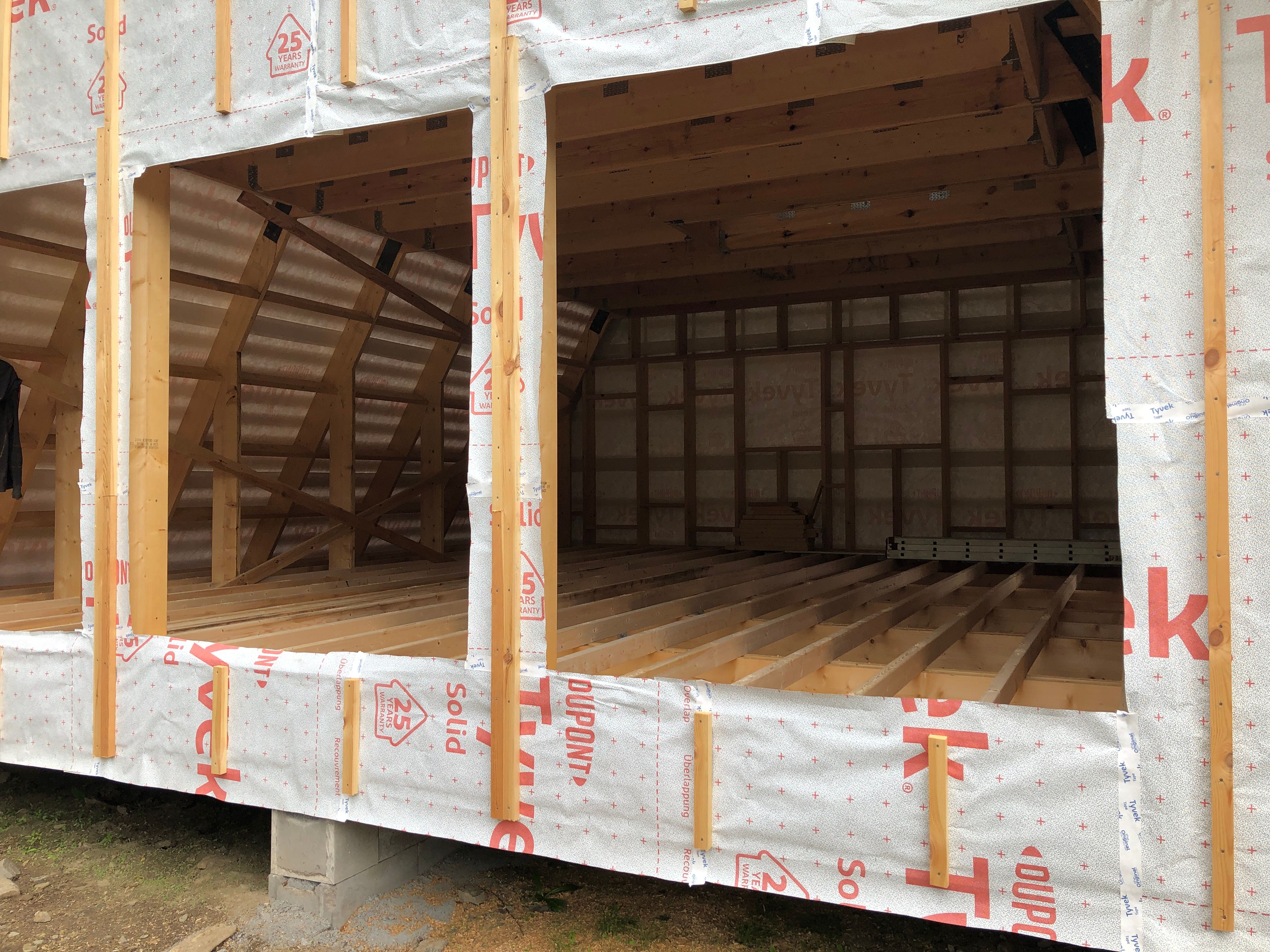
Here is something that does not come up often enough: floor area and volume are not the same thing.
A conventional rectangular house and an A-frame with the same floor area are not equal on energy costs. The A-frame's triangular profile means a lower internal volume per square meter of floor area. Less air to heat and cool. A smaller heating system. Lower running costs every year for the life of the home.
This is one of the less obvious reasons an A-frame house size goes further than the number on the plan suggests. A TRIO 75 at 71.5m² often feels more spacious than its footprint implies, partly because the open double-height living area creates a different quality of space than a flat-ceilinged box room of equal area.
Volume matters, not just floor area. When you are deciding on house size, factor in what it will cost to heat and cool that volume for the next 30 years.
A Quick Guide to A-Frame House Size By Family
These are not the sizes you might reach for first. They are the sizes people are usually happy with after they actually move in.
A couple, no children. The DUO series covers two bedrooms, living, kitchen, and bathroom with real breathing room. Compact footprint, lower energy costs, and a surprising amount of storage.
A family of three to four. A TRIO 75 handles two bedrooms and two full floors without feeling tight. It accommodates 1 to 5 people. The TRIO 100 adds a third bedroom and comfortably fits 2 to 6 people; most families find it genuinely spacious.
A larger family or one that works from home. The TRIO 120 gives you up to four bedrooms, two bathrooms, and dedicated workspace without paying for rooms that will sit empty. It fits 3 to 7 people. The TRIO 150 is the largest standard model in the range, built for 4 to 8 people. You can always build a longer A-Frame.
The pattern you will notice: the right model is usually one step smaller than the first instinct. And the people who build it are the ones who do not spend their weekends maintaining empty rooms.
Build A House You Will Live In, Not One You Will Manage
Indrek's conclusion, after decades of helping people plan builds: eliminate the things you are not really using. Plan the spaces that cover your needs, and a little extra for comfort. Not spaces that sound like a good idea in the planning phase and become dead weight the moment the mortgage starts.
The hardest part of right-sizing is doing it before the build, when the rooms are still abstract. Once a floor plan exists, everything on it starts to feel necessary. That is why this conversation needs to happen before the plan, not after.
How do I know if I am planning too much house?
Go through each room and count how many days per year you will realistically use it. Any room you cannot picture using at least once a week deserves reconsideration. Add up the build cost, the 30-year mortgage interest on that portion, and the lifetime heating cost. The number is usually larger than people expect.
What is the right house size by family type?
For a couple, the DUO series is a solid fit. For a family of three to four, the TRIO 75 (71.5m²) or TRIO 100 (97.3m²) covers the actual need with room for comfort. For larger families or those needing dedicated workspaces, the TRIO 120 (121m²) handles it without overbuilding. Most families find the model one step below their first instinct is the one they are happy with long-term.
Does a smaller A-frame house really cost less to run?
Yes, for two reasons. First, less floor area means a lower build cost, lower mortgage, and less to maintain. Second, the A-frame's triangular shape creates a lower internal volume than a conventional house of the same floor area, which means less air to heat and cool and lower energy bills every year.
Should I plan a guest bedroom or not?
Count the actual nights per year. Under 15 nights: a sofa bed in the living room is the more honest choice. Over 30 nights: the room earns its place. In between, a small backyard unit is worth pricing out -- it can generate rental income when guests are not visiting, and you can turn off its heating entirely in the off-season.
Does an A-frame feel smaller than its square footage?
Not in practice. The open floor plans, double-height ceilings in the living area, and full-length windows make A-frame interiors feel larger than equivalent square footage in a conventional house. The triangular profile is a different spatial experience, not a lesser one.