How long does it take to build a prefab house?
Between our YouTube Channel and our email list, every month we get hundreds of new subscribers.
Most people come to us with two questions:
- how much does it cost to build a house;
- how long will it take.
Without going into more details (what one wants to build, where and when) it is impossible to give an answer.
But even when some of the details are clarified, the time it takes to build the house (and the money you’ll have to spend) will most likely depend on how good you are to manage the project.
Here I explain…
The time it takes to build a house is measured from the moment you get your construction permits. However, the total time you’ll spend on the project has to include also the time that goes into planning.
A quick Google search for ‘how long it takes to build a house’ returns a clear answer:
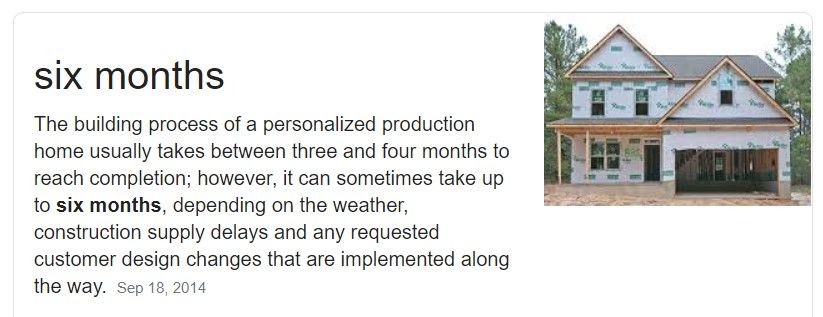
This answer makes me chuckle because it is quite obvious that building time depends on a lot of factors. Consequently, there can not be a single “bold” answer that fits all cases.
As you can imagine, the size of the house plays a big part in the time it takes to get the building works done.
A hut and a mansion will obviously follow very different time schedules.
In general, if we talk about traditional custom-made homes (built entirely on-site), it can take anywhere from 6 months to 5 years.
Prefab houses, be it pre-cut kit homes or element ones, are usually built in a much shorter timeframe.
What influences the timeline?
The time it takes to build a prefab or modular home depends on several key factors:
- Standard vs. custom designs: Sticking to a standard plan can shave weeks off your schedule, while a fully custom design usually requires more time for planning and approvals.
- Permitting: The process of securing building permits can vary widely based on your location and the complexity of your project.
- Site preparation: How quickly you can get your site ready—think groundwork and foundation—can also impact the overall schedule.
- Home size: Naturally, a larger home will take longer to fabricate and assemble than a compact one.
- Factory and foundation timelines: While modules are being built in the factory, foundation work can happen on-site, but any delay in either step can affect your move-in date.
To give you a ballpark, the fabrication and assembly process for most modular homes will typically take between 16 to 31 weeks from start to finish, depending on these variables. By comparison, homes built entirely on-site (“stick-built” houses) can often require 28 to 37 weeks at a minimum—sometimes much longer.
So, if speed is a priority, prefab homes have a clear advantage, especially when you stick to a pre-designed plan. However, opting for customization can still be worthwhile if you have specific needs, just be prepared for a slightly longer timeline.
What Makes prefab Homes Stand Out?
When it comes to design flexibility and efficiency, prefab homes have quite a few aces up their sleeves compared to traditional builds.
First, the design process is far more streamlined. You aren’t stuck with cookie-cutter options—most prefab and modular builders offer a surprising range of layouts, finishes, and features. Whether your heart is set on sleek Scandinavian minimalism or you want a cozy, farmhouse vibe, you’ll find the palette is impressively broad. Plus, customization goes hand-in-hand with speed: while architects and contractors for custom-site builds may take months wrangling blueprints, modular designs are tailored quickly, thanks to established patterns and digital tools.
The efficiency benefit can’t be overstated. Since pieces are constructed in a factory setting, building isn’t affected by weather delays—a blessing in places with unforgiving winters or rainy spring seasons. Assembly line precision, strict quality controls (think of the standards set by organizations like the International Code Council), and advanced building technologies mean less wasted material and fewer on-site surprises. In many cases, waste from modular construction is dramatically less than with classic stick-built homes.
And let’s not forget construction practices. With much of the heavy lifting done off-site, the on-site build phase is reduced to a matter of weeks instead of months. That means less disruption to your life, fewer tense “Are we done yet?” moments, and reduced overall labor costs. Even inspections can be faster—the modules usually arrive pre-approved to meet building codes, so you’re not waiting on a parade of inspectors.
In short, prefab homes blend modern design potential with an efficient, predictable building process and current best practices in construction. If time, customization, and peace of mind are high on your wishlist, prefab construction is worth considering.
Building Phases
To quantify the time you’ll need to build your home, you have to understand the building process and to account for all the planning you need to do before starting to build.
To help you with that, we put together a printable checklist.
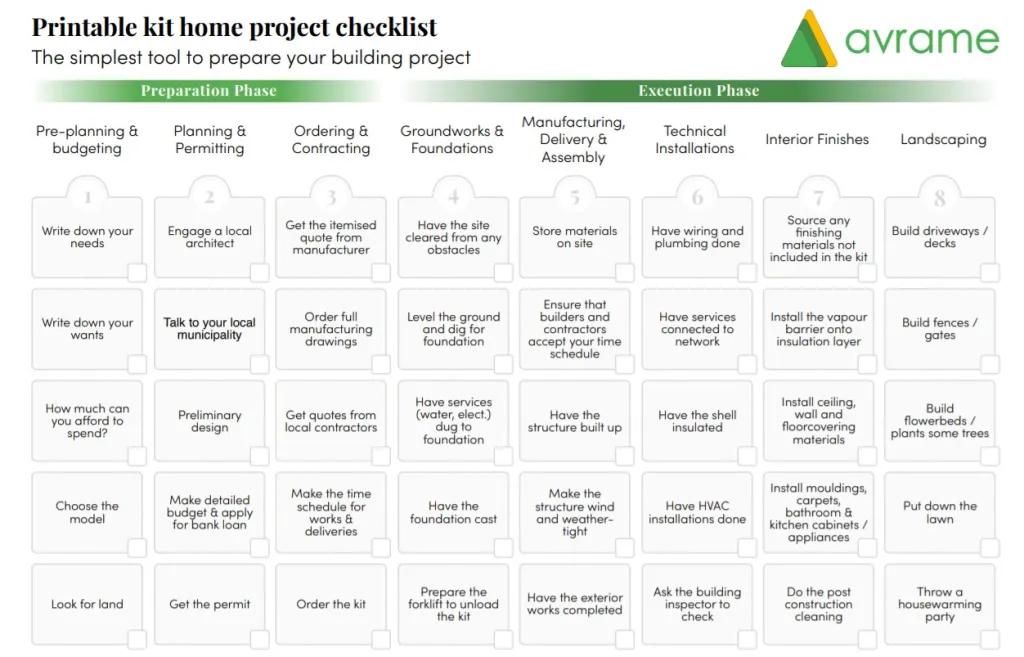
The checklist shows all the stages and the tasks which must be completed in order to get the house done.
There are 8 phases in total:
- Pre-planning & Budgeting
- Planning and Permitting
- Ordering & Contracting
- Groundworks & Foundation
- Manufacturing, Delivery & Assembly
- Technical Installations
- Interior Finishes
- Landscaping
Sidenote: these are the very same phases you can find in our Self-building Guides, explained in more detail.
Each of these phases requires time and money.
If you want to run your project within budget and on schedule, you have to understand the activities that should be performed in each phase.
Also, as you might already know, it is very important that you get a good estimate of what the building is going to cost you – BEFORE – you start the construction works.
Typical Timeline for Each Phase of Building a prefab Home
If you’ve ever wondered how those sleek prefab homes pop up seemingly overnight, the secret lies in the efficiency of their process. Still, each stage comes with its own timeframe—and just like with any building project, certain steps can go faster or slower based on your choices and luck with paperwork.
Let’s break down what you can generally expect:
* Securing Land & Permits: Before you dream about décor, you’ll need a plot and local approval. This initial phase usually takes between 6–9 weeks, depending on how friendly your zoning board is (pro tip: bring them cookies).
* Design & Customization: If you’re opting for a cookie-cutter plan, you might breeze right through. Want something unique? You could be looking at 0 up to 12 weeks here, depending on revisions and back-and-forth with your designer.
* Site Preparation: Clearing the land and making it build-ready generally takes about a week, especially if your plot isn’t hiding any ancient Viking treasures.
* Foundation Work: Once things are moving, setting the foundation clocks in at around 4 weeks. That’s the solid base—literally and figuratively—of your future home.
* Delivery & Assembly On Site: Bringing house pieces to your land and putting them together—think giant, life-sized Lego—typically requires around 2-8 weeks for everything to lock into place.
Altogether, barring any extreme curveballs from weather or bureaucracy, you’ll find the modular approach hands you the keys much faster than traditional on-site construction, which can still stretch up to 28–37 weeks—or longer if the universe feels mischievous.
From First Consultation to Moving In: The prefab Home Journey
It’s one thing to dream up your perfect home, but quite another to see that vision step into reality—especially with modular construction, where things move at a brisker pace than most people expect.
So, what does the path actually look like from the first phone call to settling down with the keys in your hand? Let’s break down the key steps you’ll take:
Initial Consultation & Vision: Everything starts with a chat. This is where you outline your must-haves, nice-to-haves, and maybe even a secret wish list. Bring your Pinterest boards and magazine clippings—this is the time to dream big.
Sorting Out the Site: If you’ve already secured your patch of paradise, great. If not, there’s some homework—like scouting out potential plots and making sure building is permitted. Location, of course, can change almost everything, from design tweaks to timelines.
Zoning and Permits: Every municipality (and its grandmother) will have rules you need to follow. This means navigating zoning laws, checking local building codes, and, if you’re near a shoreline or wetland (hello, New England!), securing special permissions.
Design and Planning: Here’s where floor plans get finalized, exterior finishes are chosen, and the home starts to take shape—on paper, at least. Use this phase to make decisions about size, layout, energy efficiency, and the materials you want throughout.
Budgeting and Financing: This is when you’ll want to nail down your numbers. Speak with your bank or a mortgage broker about construction loans, which often transition into a regular mortgage once your house is complete. Avoid surprises by sorting out the financial side early.
Preparation and Foundation: Before the modules roll in, the building site needs prep—site grading, digging trenches, and pouring the foundation. (This phase is often falsely assumed to be “just a few days,” but meticulous groundwork pays off in the long run.)
Manufacturing and Delivery: While the ground team works away, your chosen design is built off-site in controlled conditions—rain, snow, or high winds, the work continues indoors. When ready, the sections are transported and craned into place in a matter of hours.
Assembly and Exterior Add-ons: The modules are stitched together, followed by installing decks, porches, and other exterior features. Suddenly, it looks like a real home.
Technical Installations and Interiors: Plumbers, electricians, and HVAC pros do their thing, and then it’s onto bathrooms, kitchens, and flooring. Most fixtures are installed at the factory, shaving weeks off the overall timeline, but final connections are made on-site.
Landscaping and Move-In: Once utilities are up and running and you’ve passed all the inspections, there’s the final landscaping—driveways, walkways, and lawns. After receiving your certificate of occupancy, it’s time to move in and start unpacking those boxes.
By understanding each milestone, you’ll be better prepared for what comes next, avoid unnecessary delays, and get from blueprint to front porch swing with your sanity (mostly) intact.
Purchasing Land and Securing Permits
Before you can dive into the exciting world of assembling walls and hammering in that first nail, there’s some groundwork (no pun intended) that needs to happen.
The journey really begins with finding that perfect spot to plant your future home. This can involve hours spent on property search websites, a few detours to promising plots that turn out to be bogs, and—if you’re lucky—the eventual discovery of land you love. Once you’ve found it, the actual purchase process is pretty standard: negotiations, paperwork, title checks, and plenty of signatures. Depending on how fast everyone moves (and how bureaucratic your local authorities like to be), securing your plot can take several weeks.
With land in hand, it’s time to brave the world of permits. This stage can test your patience, as different municipalities have wildly different requirements. You’ll typically need to submit architectural drawings, site plans, and energy calculations. If you’re building somewhere like Oregon or California, be prepared: local zoning rules and environmental regulations often mean extra forms and the occasional head-scratching conversation with a planning board.
On average, from wrapping up your land purchase to getting all the green stamps on your permits, you’re looking at a timeframe of about 6 to 9 weeks. Of course, this can stretch out if there are complex site conditions or if you get caught in a queue at the county office behind someone disputing the width of their driveway.
Moral of the story? Start early, gather your paperwork, and don’t be shy about calling your local authority just to check in. A little persistence goes a long way at this stage.
How long does construction take?
With an Avrame kit, as soon as you have the building permit and you are officially ready to get the works in motion, things roll out pretty quickly.
SOLO houses can be completed in a matter of a few days.
DUO houses can take up to a few weeks.
For TRIO houses, the average building time is 8 weeks (for the smallest model).
Even if you’re going for the biggest house, the structure is super quick to build. It will take one week tops.
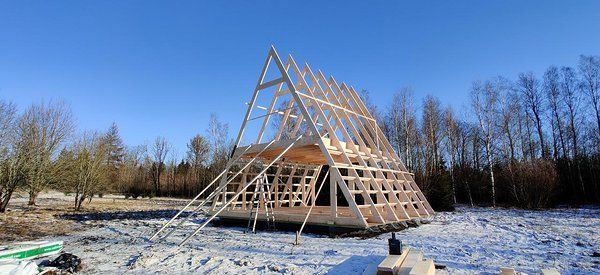
This photo of a TRIO 75 was taken just 4 days after the materials were delivered to the construction site!
However, after you assembled the kit, the speed of the remaining activities depends on how well you planned them.
Yes, after putting together the kit you still have a number of things to do…
From the checklist you can see that, after the kit is up, you still have 3 phases to deal with. We’ll come to that in a moment… but before let’s have a look at the phases that come before starting the construction works.
How long does planning take?
The length of the pre-planning and planning phases can vary dramatically from location to location and from project to project.
In my own experience, getting approvals and permits can take over 1 year in urban areas (even 2!) while it can be done in just 2-3 weeks in rural areas.
However, besides the official documentation, the really important part is the time-plan you make for the implementation of the works.
A good time-plan and a good budget are the two most important factors in the success of your project.

Why is this so important?
With poor planning, the likelihood of running into hiccups and setbacks during the process is amplified.
Every little thing you did not plan or foreseen will add up and increase your numbers, resulting in:
- delays (and more delays);
- higher costs;
- frustration and headaches.
Note that a delay of “just a few days” on one activity can result in weeks lost for an activity that comes next.
For example: say you are late in sourcing the insulation material and you and up being a couple of days late with finishing the insulation of the house.
Your electrician cannot start his work on the day you previously agreed. Unfortunately, he is fully booked for the next two weeks and he is not going to be able to serve you. So you have to look for another one or just wait.
It turns out that, even getting another electrician, you’ll be 10 days late on your schedule. This completely messes up the interior works… you are now 1 month late.
On top of that, the guys that will make you the interior finish will be super busy at the time you want them to come, so they are now asking you more money to juggle your work together with those they already had on their schedule.
You see?
…it is very easy to drift away, both in time and in money.
Looking back at the 3 phases that come after the assembly of the kit (technical installations + interior finish + landscaping), you want to make sure you plan them really well, so you don’t end up in a situation like in the example above.
Plan with buffers
When planning it is good to add some buffer time to cope with small delays and uncertainties. You can think of buffer time as a period of inactivity where nothing is happening.
If you plan these pauses intentionally, they are not a bad thing.
If all the thinking and planning is done well in advance, the entire project should proceed pretty smoothly. Strategically planned buffer times will absorb unforeseen situations without causing out hiccups or delays.
Conclusion
A good time-plan and a good budget are the keys to building fast and with less money. The time you invest in planning is well spent.
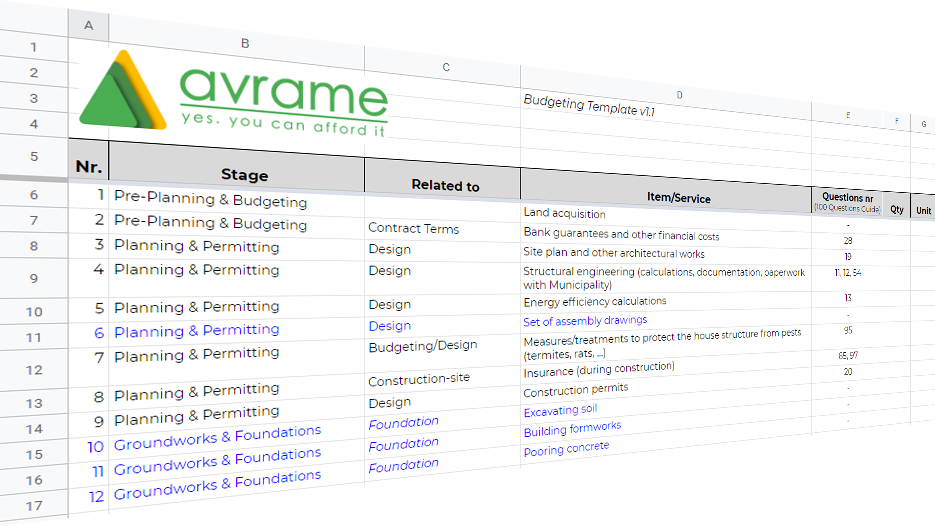
Here at Avrame, we manufacture kit homes but we also strive to help people to plan their project in the best way.
Our philosophy is to help people to build homes they can truly afford… and this also means making no mistakes in the process.
With our videos and Self-building Guides, we really want to make sure you’re not only getting a house, but you’re also going to have a hassle-free experience.