Dormers for A-frame houses
Dormers are an excellent add-on for A-frame houses.
In this article, I explain to you why …and I’m going to share with you one unusual way of using dormers.
What is a dormer
A dormer is a structure made of three vertical walls and a roof that protrudes from the roof of a house.
A dormer usually contains one or more windows.
In the case of an A-frame house, dormers are at ground level and their height spans from the floor to the full height of the room.
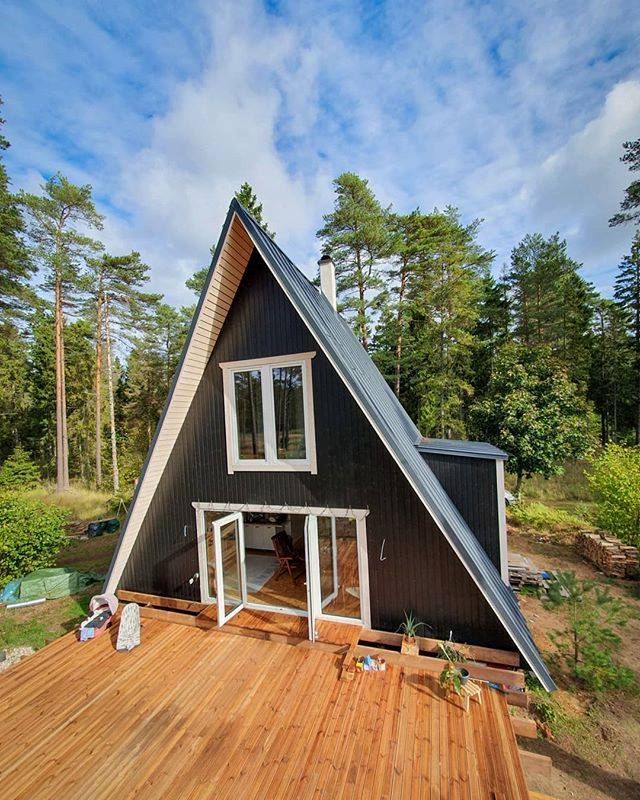
Dormer Details in A-Frame Houses
When designing a dormer for an A-frame, the roof style is, unsurprisingly, A-frame—typically featuring a steep 60-degree roof pitch. The underlying structure often uses 2×6″ kiln-dried spruce rafters set 24 inches on center, though this can be upgraded for extra strength or insulation.
To ensure comfort and energy efficiency, dormer roofs often include a vapor barrier and about 5½ inches of fiberglass insulation (R21), all tucked beneath a shiplap pine interior ceiling sheathing for a warm, finished look. Some designs also showcase exposed collar ties for a bit of rustic charm and added structural support.
This combination not only brings in light and headroom but also ensures your dormer is as sturdy and cozy as the rest of your A-frame.
4 reasons you might want a dormer
There are four main reasons why you might want to consider a dormer in your home:
- dormers extend outside the limits defined by the roof, adding more volume to the living space. Not only they provide more volume but they also provide a good amount of vertical walls;
- A-frame houses are notorious for their lack of vertical walls, so adding some is definitely a benefit;
- the dormer expands the house with more volume, but it also increases the usable height of the space closer to the edge of the building (otherwise usable only for storage or technical installations);
- a dormer can be equipped with one or more windows, providing a great deal of natural light.
Practical examples of how to use dormers
In A-frame homes, dormers are an excellent solution to expand the rooms at the ground level without altering the geometry of the house.
Dormers can be used to:
- make space for the bathtub in the bathroom;
- extend the living room (or the kitchen) and get more light in the house;
- simply add large windows to the house.
When planning your dormer, it’s important to consider how it will fit within your floorplan and which doors or windows you’d like to include. Most dormer designs work best with standard window and door sizes, but if you have something more specific in mind—like a floor-to-ceiling picture window or a unique entryway—you may need to adjust the framing and use additional materials to accommodate these custom features. This gives you plenty of flexibility, whether you want a cozy reading nook, a bright breakfast corner, or just a splash of extra light and space where you need it most.
Construction of Avrame dormers
We worked hard to engineer a dormer construction that is simple to build and that can be scaled up in several connected dormers.
The basic dormer module is 2.4m wide (7.9 ft).
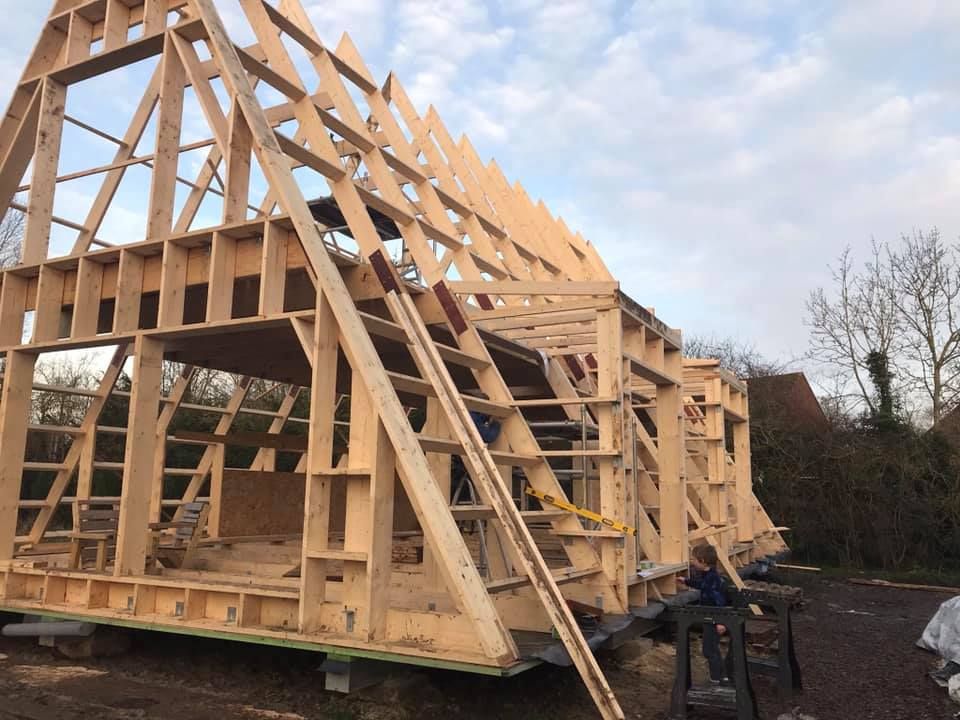
While we can build multiples of that, we do not provide other in-between measures because this would complicate the construction and it would end up being very expensive.
An unusual way of using dormers
Working with many projects, we’ve received a lot of exotic requests.
From time to time some really good idea comes along… and that’s how we came to connect two A-frame houses through their dormers.
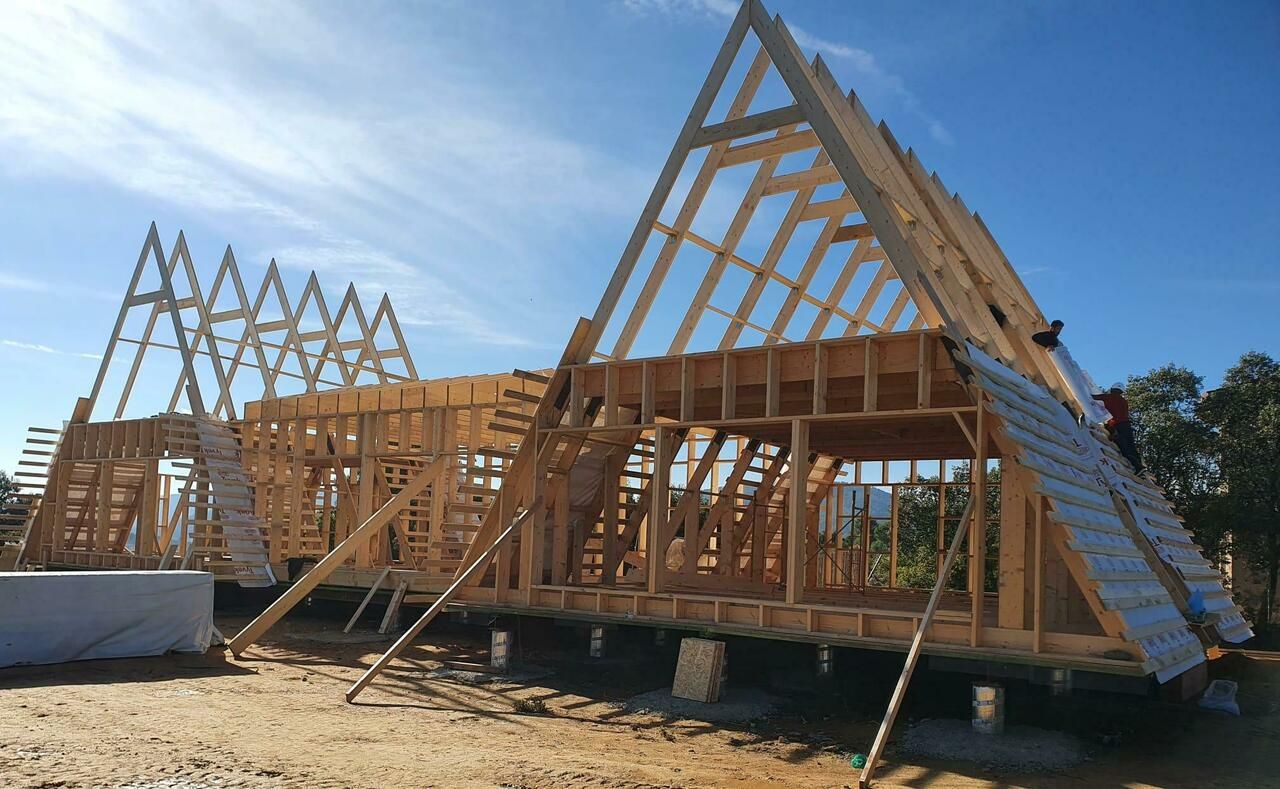
We’ve been experimenting with this concept and we discovered that you can connect together pretty much every model we have.