Cons of A-frame Houses That Will Make You Rethink
We really don’t want people to build an A-frame house… unless they are totally in love with it.
As in relationships, things end up badly if one is not in full-hearted and for the long run. So, this time, instead of praising A-frame buildings, I am going to give you five reasons you should keep clear of them.
But before you start dreaming of that cozy ski-lodge vibe, here’s a thought: try before you buy (or build). If you’re on the fence about whether an A-frame is right for you, consider booking a stay in one—there are plenty of vacation rentals on Airbnb or find suitable one from our site. Spend a week living in the space. Notice how you move around, how much privacy you have, and whether the layout works for your daily routine. Is it comfortable, or do you find yourself ducking and cursing those iconic steep walls? Do you love the open feel, or do you crave more separation? Take notes on what works and what doesn’t.
At the end of your trial run, ask yourself: are you genuinely smitten, or is the romance already wearing thin? Use your real-life experience to help you decide if you’re ready to commit—or if it’s time to swipe left on the A-frame dream.
1. You can build it by yourself
Yes, a small A-frame home kit (SOLO or DUO for example) is so simple that two people can put it up without extra help.
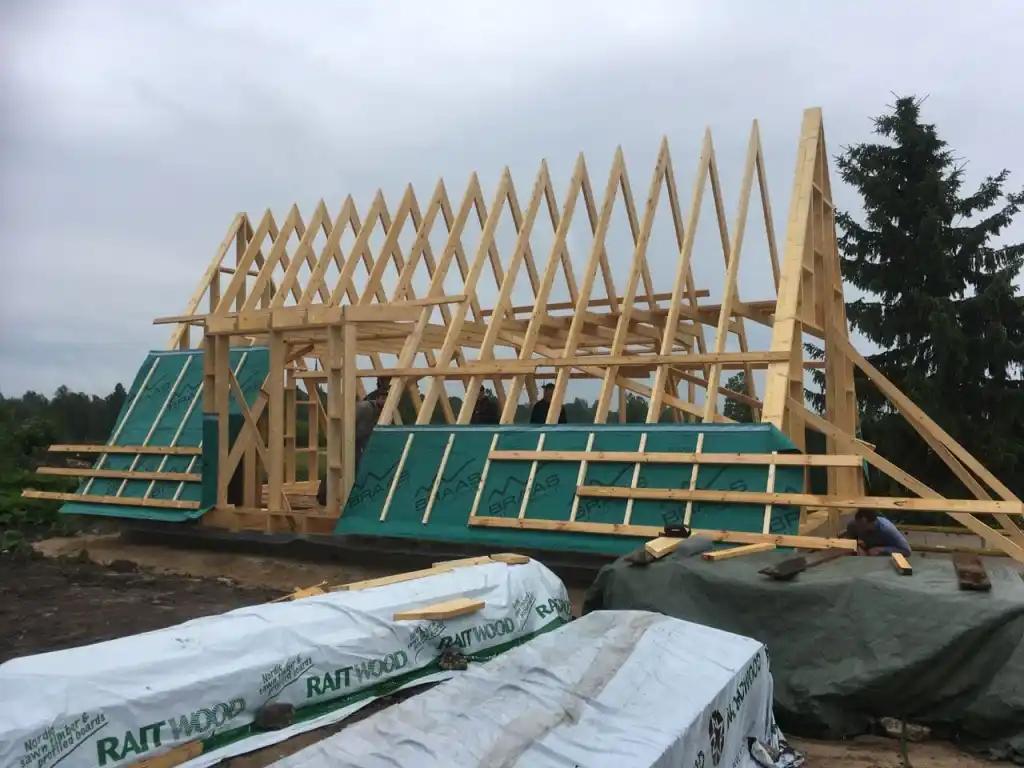
Larger kits might require more people but the music is the same: you can get it up by yourself.
Why is this bad?
Cause people can get overconfident and face the installation without due preparation.
Here is the hard truth:
without doing proper homework and without involving the right people for help, you are setting yourself up for failure.
A few words of advice:
- read as much as you can on the topic of self-building before you start the project
- talk to people who have done it already or who work in construction
- get a feeling for what you could be overlooking (our Guides can help with that).
If you do these things right, then self-building can become a big plus.
2. It has no external walls
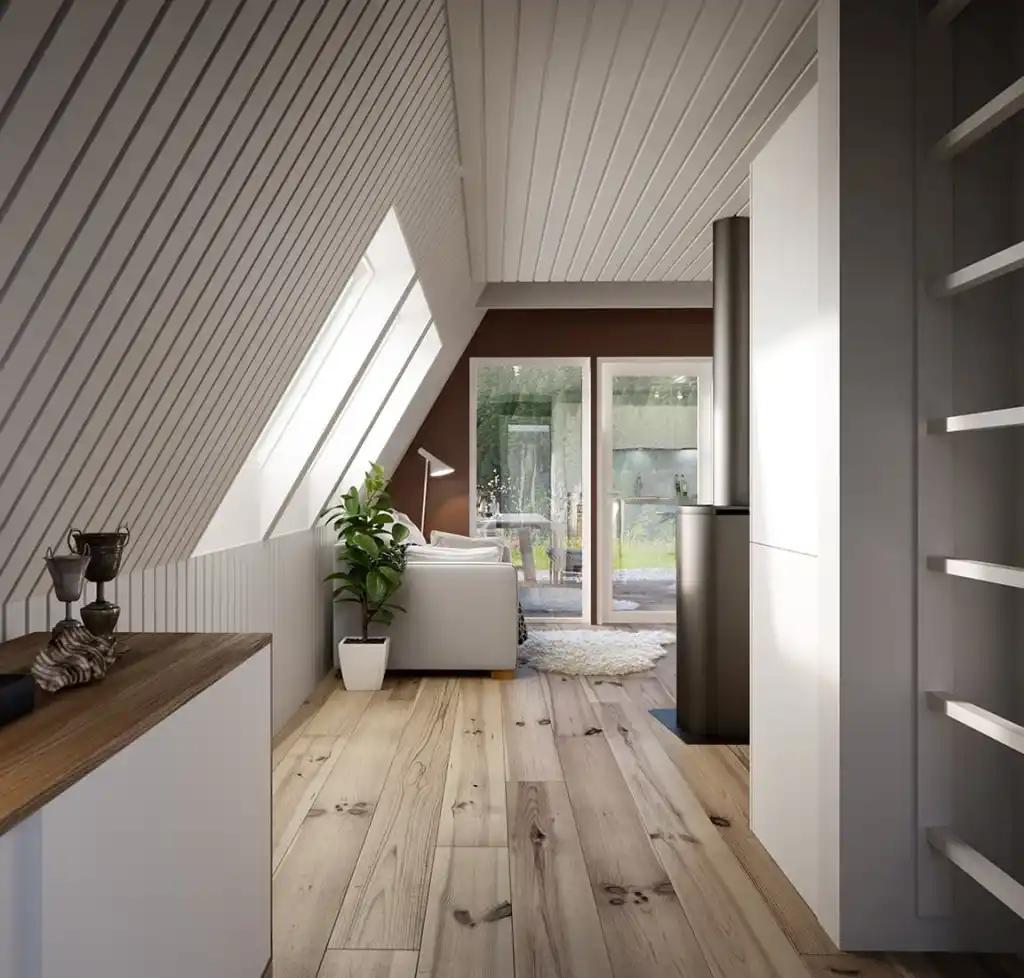
Except for the front and back walls, there is no vertical external surface in the house.
Is this a problem?
Well, this is highly subjective.
The inclined ceiling and the ample interior spaces are what gives A-frame their characteristic feeling. Some like it, some don’t.
To compensate for the inclined interior surfaces you have the large open-space interior areas.
A-frames are famous for their deep eaves, soaring lofts, and wide-open layouts. If you’re after a home design that maximizes shared spaces and brings in a sense of fun and character, then the unique geometry of an A-frame might just be your thing. The lack of traditional walls creates a playful, airy vibe inside—think “mountain cabin meets modern art gallery.”
In the TRIO series, the width of the living room is 6.2m (over 20 ft)… that’s a big plus you get for not having exterior walls.
So, while the absence of vertical external walls sets the A-frame apart visually and structurally, it also opens up the interior, making it an inviting option for those who crave spaciousness and a touch of architectural adventure.
3. It has 20% more exterior surface
That’s right… compared to a regular house offering the same living space, it has about 20% more surface exposed to the elements (yes, we did the math… more than once).
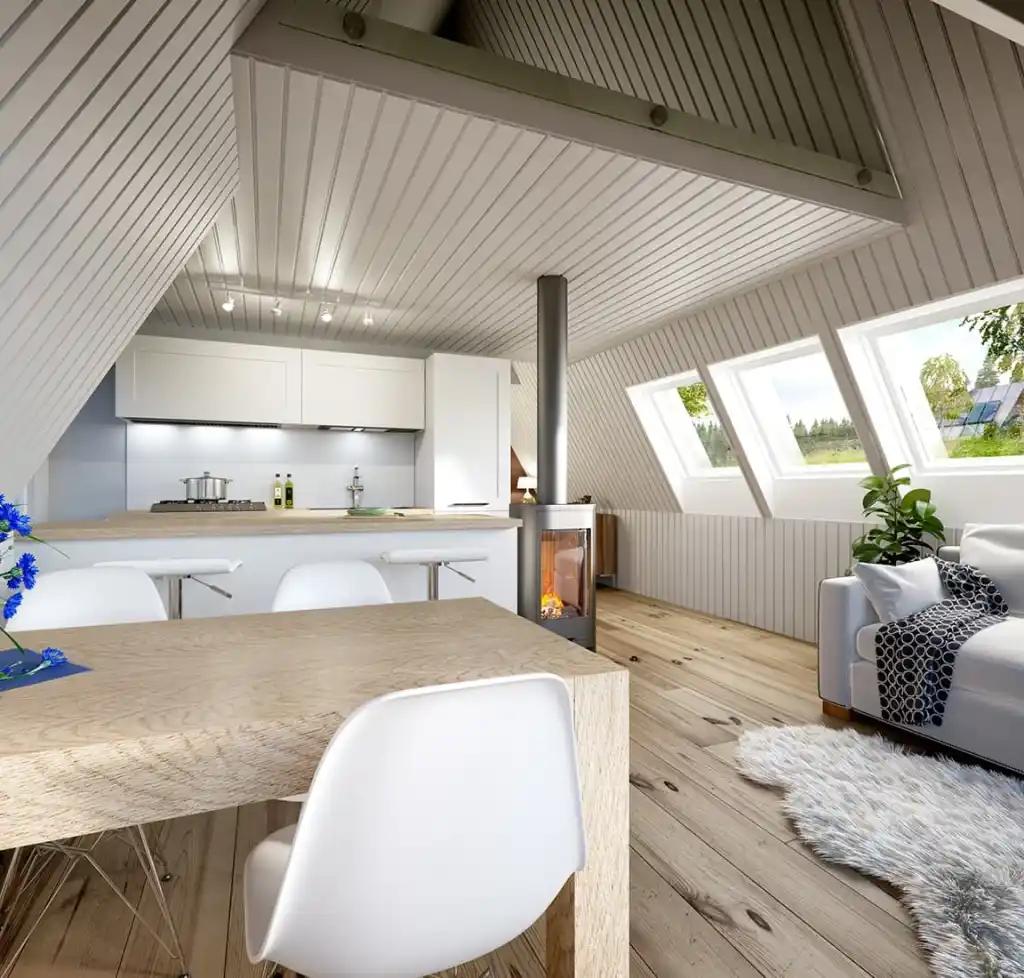
However, the length of the connections between construction components (floors, slab, walls, roof), is about 10% shorter than what would you would find in a regular house.
This means:
- you need 10% less material to build the connections
- you get better air-tightness
- you get less heat-loss from the connections.
Yes, the materials you need for the building envelope are still 20% more (read extra cost on materials) but, as it is mostly roof we are talking about, the degree of insulation is generally better than the one you find in regular walls.
The result?
Overall the A-frame consumes less energy than a regular house of an equivalent living area (read lower energy bills).
…and does it cost more to build?
Generally, it doesn’t.
In fact, installing a metal roof costs way less than installing exterior cladding on a wall… without counting the maintenance over the lifespan of the house.
4. Resale Value Might Be a Gamble
Now, let’s talk about the elephant in the room: resale value.
While A-frames have a loyal fan club (and if you’re reading this, you might already be an honorary member), not every homebuyer out there is looking for a quirky triangle in the woods. Local tastes and market trends matter—a lot.
So, before you get your heart set on your dream A-frame, it’s worth doing a little legwork. Chat with local real estate agents and dig into what actually sells in your area. Ask them bluntly: “How easy is it to resell an A-frame in this town?” You might be surprised by the answer!
Even if you plan to make your A-frame a forever home, life has a way of tossing curveballs. A little planning now can save headaches later if you end up needing (or wanting) to put your house on the market.
Bottom line? Make sure your love for A-frames matches up with what people are willing to buy nearby.
5. You cannot step on the roof
Yeah, there is no way around this… you cannot step on the roof. It is simply too steep.
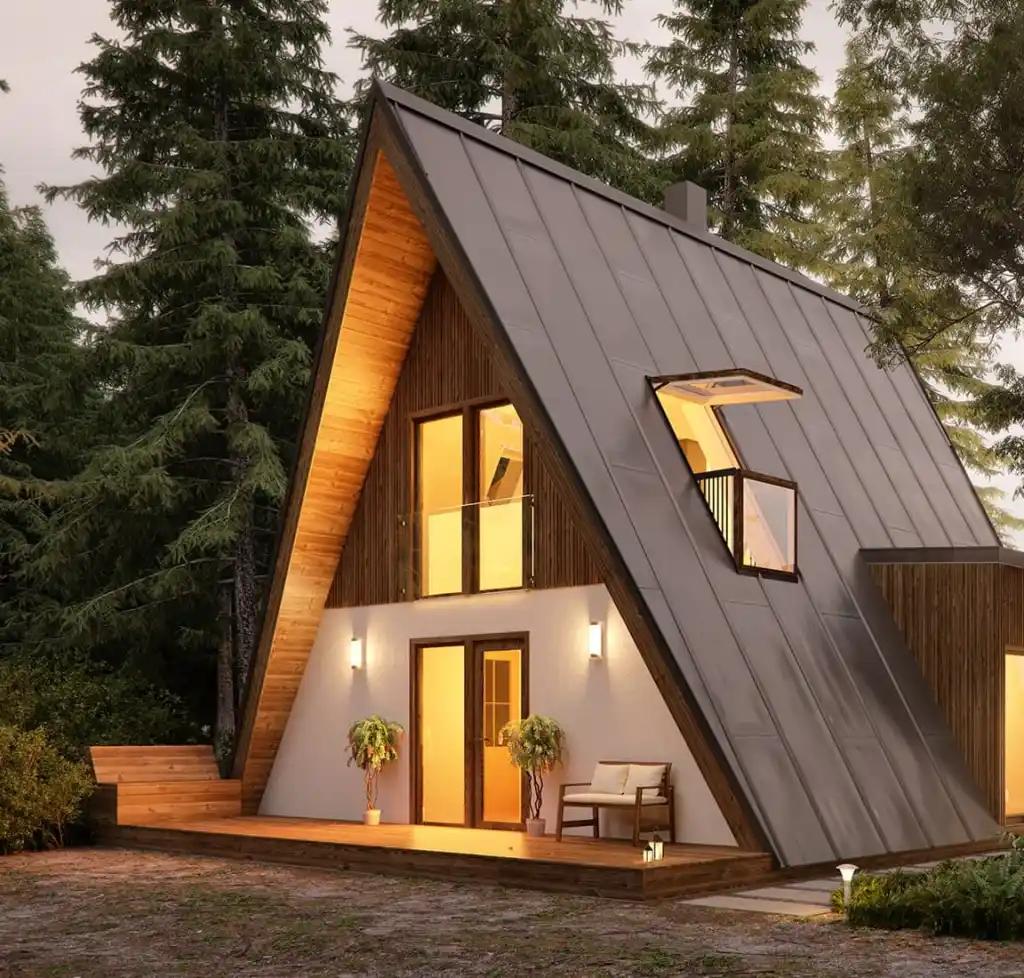
But hey, as you cannot stand straight on the metal cover of your house, so cannot the snow or the heavy rain.
Everything falls down to the ground. No questions.
Guess what?
…even the wind has a hard time getting a good grasp on this roof.
So what seems like an issue (who wants to walk on a roof anyway???) comes to be quite handly.
And you know what? …the steep angle of the roof makes it perfect for generating your own electricity with solar panels!
…and no, you don’t have to clean them from snow in the winter cause snow still follows gravity.
6. No conventional storage space
Ok, here we are tight.
Forget about lining your walls with bookshelves or that epic gallery wall you’ve been pinning on Pinterest. The sloped ceilings make standard furniture placement—let alone tall wardrobes or cozy nooks—a real Tetris game. Floor space (especially upstairs or in lofts) is at a premium, and privacy is limited. Think open lofts, not tucked-away bedrooms.
If you have a big family and you are used to having several wardrobes, you might get in trouble by getting yourself an A-frame.
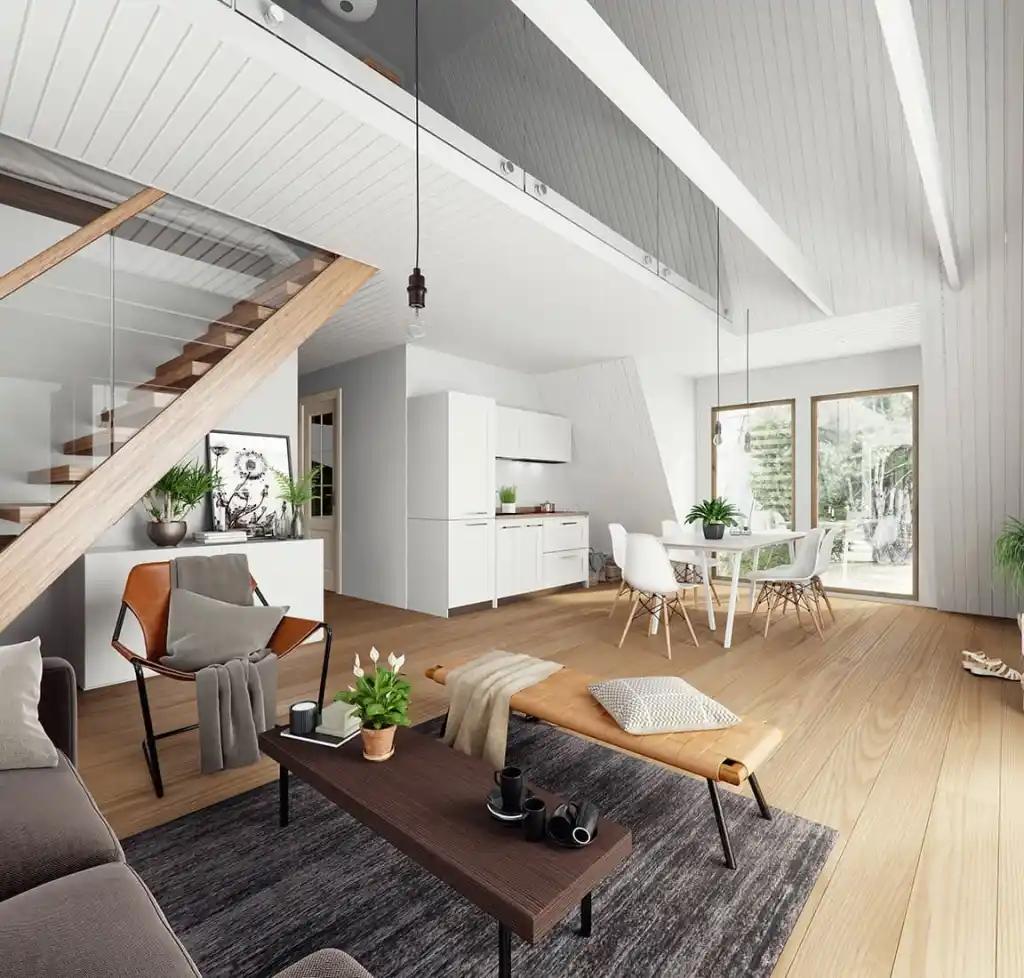
We already confessed that there are not many vertical walls inside an A-frame house, therefore space for installing a traditional wardrobe is quite limited. But hey, there is plenty of unused space close to the floor, both on the ground and on the first floor.
For a TRIO 100, we are talking about 15 cubic meters (530 cubic foot) of hidden and empty space at the ground floor…
…all you need is a little bit of creativity and you can turn most of this space into proper storage.
The Loft Dilemma
A-frames often feature loft spaces, which sound dreamy in theory but do come with a twist. These lofts usually have at least one wall open to the floor below—and rarely a door in sight. So, privacy is, let’s say, “open to interpretation.” Sure, you can use the loft as a bedroom, but unless you’re a heavy sleeper (or a fan of house-wide acoustics), it might not be ideal.
But don’t write off the loft just yet! They make fantastic playrooms or reading nooks—a perfect spot for a cozy library with a view of the living space below. If your vision of “usable square footage” means lots of private, closed-off bedrooms, the A-frame’s wide-open loft may not tick all the boxes. But if you like flexible, creative spaces, you might be surprised at how well it works for you.
So yes, conventional storage and privacy can be a challenge in an A-frame, but with smart solutions and a dash of imagination, you can make the most of every quirky nook and cranny.
Who Should Consider Buying or Building an A-Frame House?
Let’s be honest—a-frame houses are not for everyone, and that’s perfectly fine. But if you know what you want, here are the kinds of folks who might find themselves head-over-heels for these angular abodes:
- Lovers of Light: If your idea of bliss is letting the morning sun pour in through towering windows, you’ll appreciate the way an A-frame turns sunlight into an interior design feature.
- Folks with a Flair for Unconventional Design: The sloped walls and unique spaces demand creative thinking. If you’re the type who relishes fiddling with furniture layouts or dreaming up clever storage hacks, an A-frame will keep you happily occupied.
- Nature Enthusiasts: If you crave panoramic views of forests, lakes, or mountains (or all three), the geometry of an A-frame is perfect for capturing the best your property has to offer—think of it as Mother Nature’s front row seat.
- Minimalists and Escapists: People seeking a cozy, compact retreat for weekends or off-grid living will find A-frames both inviting and efficient.
Where Are A-Frame Houses Most Common?
Let’s talk geography for a second—where do these pointy-roofed beauties pop up the most? While you might fantasize about your future A-frame nestled anywhere from California redwoods to Maine woodlands, the reality is a bit more specific. A-frames thrive especially in scenic getaways. Think: snow-dusted mountain retreats in Colorado, tree-lined lakeshores in Minnesota, and woodland clearings in upstate New York. These are the kind of places where gazing out oversized windows with a mug of coffee isn’t just a cliché—it’s why you came in the first place.
What Makes an A-frame House Stand Out?
Before we dig into the storm clouds, let’s set the scene: What actually defines an A-frame house, and why are people so enchanted (or wary) of these angular abodes in the first place? Picture the quintessential ski cabin you’d find tucked between the pines in Lake Tahoe or the Catskills—a dramatic, triangular silhouette slicing into the treetops. That’s your A-frame. This iconic design, reminiscent of an oversized capital “A” or a child’s drawing of a house, has been luring architects and dreamers alike since the 1930s. But look beyond the novelty, and you’ll notice some classic features you’ll find in nearly every A-frame: Soaring, steeply pitched rooflines that run all the way to the ground—think “mountain tent you never have to pack away.”
- Expansive windows—sometimes entire walls of glass—making the most of sunlight and those million-dollar views (perfect for both beach getaways and snowy retreats).
- Open-plan living spaces, minimizing walls and maximizing that airy, uncluttered feeling.
- Deep overhanging eaves, offering shelter and letting you hear the rain while staying blissfully dry indoors.
- Lofty ceilings, often crowned by a cozy sleeping loft perched above the great room.
- Wood cladding and natural finishes, keeping things warm, rustic, and in harmony with the outdoors.
In short, A-frames are designed to blur the line between inside and out, letting you soak up nature without sacrificing comfort. But—brace yourself—these same quirks and charms can come back to haunt you…
Conclusion
I tried to make you hate A-frames… but the more I dig deep into every aspect of it, the more I don’t see why people should build a regular “cubic” house.
A-frame homes are not for everyone but, for those that love this super-efficient concept, A-frames can be (and will be) a deep satisfaction.
Let’s be honest—A-frames don’t just look cool, they have some pretty compelling real-world perks that traditional “cubic” houses just can’t match.
Why do people go crazy for A-frames?
- The roof of dreams (and gravity): That famously steep roof isn’t just for show. Snow, rain, leaves—gravity handles it all, shooing debris right to the ground. Live somewhere with heavy winters? Your roof won’t be sagging under a pile of snow. Live by the beach or in a windy spot? The wind slides up and over, not through your living room.
- Windows that make you swoon: The slanted roof creates space for those massive, floor-to-ceiling windows. The result? Sunlight floods in, heating your home (and your cat’s favorite nap spot) while framing every mountain, forest, or lakeside view. It’s like living in a postcard, but with central heating.
- Build it fast, build it smart: A-frames are often built from simple materials—wood, mostly—and their shape keeps construction straightforward. They’re famously budget-friendly and scalable: you can have a cozy tiny house or a roomy family retreat. One adventurous couple even built an 80-square-foot A-frame for just $700 (extreme, but you get the idea).
- Open, airy spaces: Thanks to their shape, A-frames lend themselves to open floor plans. Cook dinner while watching the sunset, sip your morning coffee as snow drifts past your windows, or just enjoy how the high ceilings make even modest rooms feel grand.
- Lofts, beams, and character: High ceilings mean you get options—add a dramatic light fixture, a sleeping loft, or just stretch out and enjoy the airiness. The quirky angles and deep eaves give each A-frame plenty of personality. If you love a home that feels unique (and maybe a little whimsical), you’ll feel right at home.
Sure, there are quirks—storage takes creativity, and you probably won’t be hosting a rooftop barbecue. But for those who get it, A-frames deliver comfort, efficiency, and a daily dose of architectural delight.